
Commercial Glue-Down LVP Installation in Central Florida.

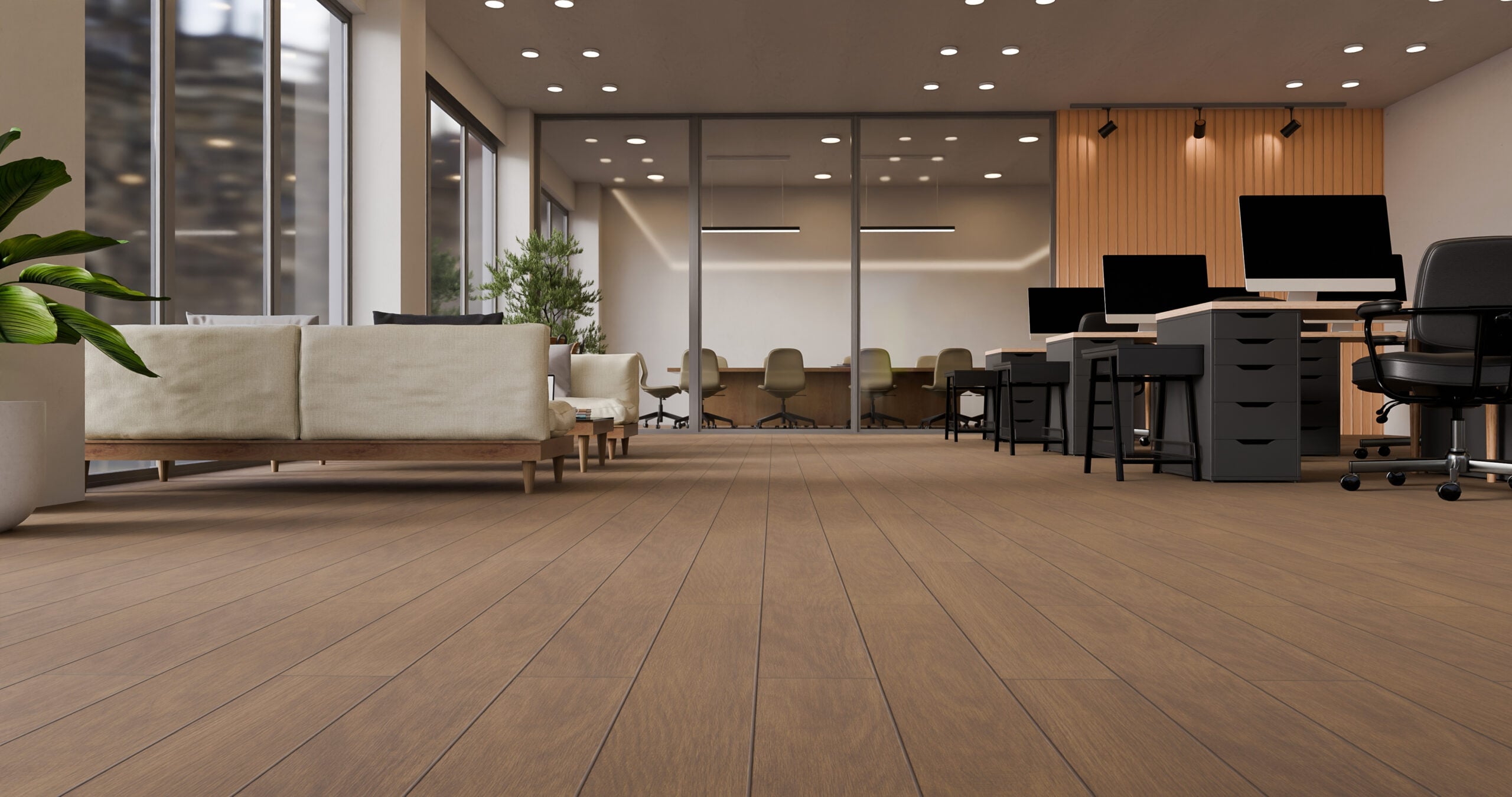
Permanently bonded to the slab. No movement under rolling loads. No expansion gaps restricting furniture placement. No floating floor edges that lift over time. Commercial glue-down LVP is the correct specification for high-traffic commercial environments in Florida, and Joshua installs it with the adhesive system your slab's moisture conditions actually require.
GLUE-DOWN VS. FLOATING LVP — THE COMMERCIAL CASE

Why Commercial Properties Require Glue-Down LVP, Not Floating..

Floating LVP is the correct installation for most residential applications and many light commercial ones. It is fast to install, easier to replace in sections, and does not require adhesive. But it has specific limitations that disqualify it from the most demanding commercial environments.

A floating floor is mechanically free from the substrate. It rides on the slab rather than bonding to it. That freedom is what allows it to expand and contract with temperature and humidity changes without buckling. It is also what allows the floor to shift, flex, and produce the hollow sound underfoot that is immediately recognizable in a floating installation under commercial rolling loads.

Glue-down LVP eliminates all of that. The full-spread adhesive bonds every square inch of the plank directly to the slab. The result is a floor that behaves like hard flooring: no flex, no movement, no hollow sound, no expansion gap at the walls that restricts furniture placement or creates edge lifting over time. Under medical exam chairs, rolling service carts, office chairs in motion all day, and the concentrated daily foot traffic of a commercial corridor, glue-down performs correctly where floating does not.

Glue-down LVP advantages in commercial applications:

  • Permanent bond: full-spread adhesive contact with the slab eliminates movement, flex, and sound underfoot
  • No expansion gaps: furniture and equipment can be placed without restriction against any wall or fixed object
  • No edge lifting: floating floor edges lift over time under rolling loads; glued edges stay flush permanently
  • Superior sound transmission: direct contact with the slab eliminates the hollow footfall sound of floating installations
  • Rolling load performance: medical carts, office chairs, service equipment, and luggage carts roll without movement underfoot
  • No underlayment thickness adding to door clearance issues in commercial renovations
  • Direct moisture management at the adhesive and slab interface rather than relying on a floating assembly above it
Commercial Glue-Down LVP
COMMERCIAL WEAR LAYER SPECIFICATION

Specifying the Correct Wear Layer for Your Traffic Volume.

Commercial LVP wear layer thickness is measured in mils (thousandths of an inch). The wear layer is the clear protective layer above the decorative print that determines how long the floor maintains its appearance under commercial traffic. Specifying a 12-mil product in a high-traffic medical office corridor produces a floor that looks worn within two years. Specifying a 40-mil product in a low-traffic private office wastes budget on performance the space will never require.

Joshua specifies wear layer thickness based on your facility’s actual traffic volume and use patterns, zone by zone, before any product is selected or ordered.

Wear Layer Traffic Class / Application Performance Notes
12 mil
High-traffic offices, retail, corridors
Entry-level commercial; not suitable for rolling loads or heavy daily traffic
20 mil
General commercial: open offices, retail, medical offices
Industry minimum for standard commercial applications; handles rolling chairs and moderate foot traffic
28 mil
Heavy commercial: high-traffic retail, hospitality, education
Handles high daily foot traffic and heavy rolling loads; preferred spec for most Central Florida commercial jobs
40 mil
Very heavy commercial: healthcare, airports, industrial-adjacent
Maximum residential durability; required for healthcare environments and facilities with heavy cart or equipment traffic
FLORIDA ADHESIVE SPECIFICATION — THE CRITICAL TECHNICAL SECTION

Why Florida Slab Moisture Makes Adhesive Selection the Most Important Decision in the Project.

The single most common cause of commercial glue-down LVP failure in Florida is adhesive bond failure caused by moisture vapor pressure from the concrete slab below. Florida’s concrete slabs emit moisture vapor year-round at rates that can exceed the tolerance of standard pressure-sensitive adhesives. When the adhesive bond fails, the floor begins to telegraph, blister, and release from the slab. Replacing a failed glue-down floor in an occupied commercial space is expensive, disruptive, and entirely preventable.

The correct approach is to measure first and specify second. Joshua performs slab moisture vapor testing before every commercial glue-down project using ASTM F1869 (calcium chloride) or ASTM F2170 (in-situ probe) testing methods. The test results determine which adhesive system is appropriate for the actual conditions of your slab, not a general assumption about what Florida slabs typically do.

Adhesive Type When It Is Specified Florida Slab Considerations
Pressure-Sensitive (PS) Adhesive
Standard commercial glue-down; most office, retail, and hospitality applications
Works on properly prepared slab with moisture emissions at or below 5 lbs/1000 sq ft/24 hrs; always test before specifying
Moisture-Tolerant Adhesive
Florida slabs testing above standard thresholds; older concrete with elevated moisture emissions
Extends acceptable moisture vapor range; required on many Central Florida commercial slabs; Joshua specifies this as the default for most Florida jobs
Urethane Adhesive
Healthcare, high-load environments, moisture-elevated conditions requiring superior bond strength
Higher bond strength than PS adhesive; accommodates higher moisture vapor readings; increased rigidity under heavy rolling loads
Epoxy Adhesive
Severe moisture conditions, industrial-adjacent, or when maximum bond permanence is required
Highest moisture tolerance available; permanent bond; requires specialized application; specified for the most challenging Florida slab conditions

This level of pre-installation testing and adhesive specification is not standard practice among general flooring contractors. It is the specific technical step that prevents bond failure and determines whether a commercial glue-down installation lasts its intended service life or requires costly replacement within five years.

APPLICATION BY FACILITY TYPE

Glue-Down LVP for Every Commercial Facility Type.

Glue-down LVP is appropriate for a wide range of commercial environments. The correct wear layer, product specification, and adhesive system vary by facility. Joshua evaluates your specific space and traffic conditions during the on-site assessment before recommending a product.

Facility Type Recommended Wear Layer Why Glue-Down Is the Right Method
Medical and dental offices
28 mil minimum; 40 mil preferred
Eliminates seam gaps where bacteria collect; withstands heavy exam chair casters and medical cart rolling
Retail stores and showrooms
28 mil
Withstands shopping cart wheels and concentrated foot traffic without edge lifting or seam telegraphing
Restaurant front-of-house
28 mil; moisture-tolerant adhesive
Handles spills at the adhesive level; no floating floor movement under rolling service carts
Corporate offices (open plan)
20 mil minimum; 28 mil preferred
No movement under rolling office chairs; no expansion gap restrictions on furniture layout
Hotel rooms and corridors
28 mil; corridors 40 mil
Permanent installation survives housekeeping equipment and luggage cart traffic without seam failure
Education (classrooms)
20 to 28 mil
No movement under desk chair rolling; easier cleaning than carpet; withstands cleaning equipment
Assisted living / senior care
28 to 40 mil
Eliminates trip hazard from floating floor edge lifting; walker and wheelchair compatible surface stability
MANUFACTURERS WE WORK WITH

Commercial-Grade LVP From Specified-Grade Manufacturers.

Elite Floor Crafters sources commercial glue-down LVP and LVT from manufacturers whose products meet the wear layer, construction, and adhesive compatibility requirements of commercial property specifications in Central Florida. Every brand Joshua installs is selected for its commercial-grade construction and its track record in Florida’s climate and slab conditions.

THE INSTALLATION PROCESS

Commercial Glue-Down LVP Installation: From Slab Assessment to Finished Floor.

On-Site Assessment and Moisture Testing

Every commercial glue-down project begins with an on-site assessment before any product is specified or ordered. Joshua evaluates the existing floor condition, square footage and zone layout, subfloor flatness, and performs ASTM F1869 or F2170 moisture vapor testing on the slab. The moisture readings determine which adhesive system is appropriate for the actual conditions present. This step is non-negotiable: skipping moisture testing is the primary cause of adhesive bond failure in Florida commercial glue-down installations.

Subfloor Preparation

The slab must be flat within the manufacturer's tolerance for the specific product, clean of all contamination from previous adhesive or flooring residue, and structurally sound before any adhesive is applied. High spots are ground down. Low spots are filled with appropriate patching compound. Adhesive contamination from previous installations is removed mechanically or chemically as required. A properly prepared slab is the foundation of a glue-down installation that holds.

Adhesive Application

Full-spread adhesive is applied with the correct notch trowel for the specific adhesive and LVP product combination. The adhesive is allowed to flash to the specified open time before any planks are set. Setting planks before the adhesive has reached proper tack results in inadequate bond strength that fails under commercial rolling loads. Joshua follows manufacturer-specified open time requirements for every adhesive system used.

Plank Setting and Rolling

Planks are set from the center of the space or from a reference wall depending on the room layout and the specific product's installation requirements. Each plank is pressed firmly into the adhesive and rolled with a 100-pound three-section floor roller to ensure full contact across the entire plank. Rolling is repeated across the full floor in two perpendicular directions to eliminate air pockets and ensure consistent adhesive contact.

Cure Management and Transition

Glue-down installations require a cure period before heavy rolling loads are allowed on the floor. Joshua specifies the cure window based on the adhesive system and the ambient temperature and humidity of the space. Transition strips and edge trim are installed after the adhesive has cured. The project is not considered complete until all transitions are set, all edges are finished, and the floor has been inspected across the full installation area.
Commercial Glue-Down LVP
WHY ELITE FLOOR CRAFTERS

Florida Commercial Glue-Down Requires Florida Commercial Expertise.

Most flooring installers can apply adhesive and set LVP planks. What separates a commercial glue-down installation that holds for fifteen years from one that begins to fail in year three is the work that happens before the first plank goes down: moisture testing, adhesive selection based on actual slab conditions, and subfloor preparation that produces the surface the adhesive needs to bond correctly.

Joshua has been installing flooring on Central Florida concrete slabs for his entire career. He understands how Florida’s slabs behave in humid conditions, which adhesive systems perform in which moisture environments, and how to prepare a slab that gives a commercial installation its full service life. That specific knowledge is not a general flooring credential. It is a Florida commercial flooring credential, and it is the difference between a floor that holds and one that requires replacement.

Permanent. Moisture-Tested. Installed to Last.

Joshua visits your facility, tests your slab, specifies the correct product and adhesive system for your conditions, and gives you a complete project quote before any work is committed. Commercial glue-down LVP projects are scheduled to minimize disruption to your operations.

Our Services

Commercial Glue-Down LVP Installation Across Central Florida.

Elite Floor Crafters installs commercial glue-down LVP and LVT in offices, medical facilities, retail spaces, hospitality properties, educational buildings, and assisted living facilities throughout Ocala, Gainesville, The Villages, Citrus County, and surrounding Central Florida communities. All commercial projects begin with an on-site assessment and moisture testing before any product is specified.

Call or text 352-520-9400 to arrange a site visit. For larger commercial projects, email is preferred for initial scoping: elite@elitefloorcrafters.com

Commercial Glue-Down LVP
FAQs

Frequently Asked Questions About Commercial Glue-Down LVP Installation

What is the difference between glue-down LVP and floating LVP for commercial applications?

Glue-down LVP is permanently bonded to the slab with full-spread adhesive, eliminating movement, flex, hollow sound, and edge lifting under commercial rolling loads. Floating LVP rides above the slab on a click-lock system with expansion gaps at the walls. Glue-down is the correct specification for most commercial environments where rolling loads, concentrated foot traffic, or permanent installation without expansion gap restrictions are required.

Florida concrete slabs emit moisture vapor at rates that can exceed the tolerance of standard pressure-sensitive adhesives, causing bond failure, floor blistering, and surface telegraphing over time. Joshua performs ASTM-standard slab moisture testing before every commercial project and specifies the adhesive system based on actual readings, not assumptions. This is the single most important step in preventing premature installation failure in Florida commercial buildings.

Standard commercial applications such as open-plan offices, medical offices, and retail require 20-mil wear layer minimum. High-traffic corridors, healthcare environments, and hospitality facilities should specify 28-mil or higher. Facilities with heavy cart or equipment rolling should specify 40-mil. Joshua evaluates your specific zones and traffic patterns and specifies wear layer per area rather than using a single thickness across the whole facility.

A 2,000 to 3,000 square foot commercial space typically runs two to four days including subfloor preparation and the adhesive cure window before heavy rolling loads are allowed. Larger projects are phased to minimize operational disruption. Joshua provides a realistic project timeline after the on-site assessment, including any subfloor preparation time that affects the schedule.

Yes. Glue-down LVP is one of the preferred floor coverings for healthcare environments because the permanent adhesive bond eliminates the seam gaps and edge lifting that occur in floating installations, reducing areas where bacteria can accumulate. The correct wear layer (28 to 40 mil), antimicrobial product options, and moisture-tolerant adhesive system are specified based on the specific healthcare environment and its traffic and cleaning requirements.

Commercial glue-down LVP can be removed with appropriate equipment and techniques, though it is more involved than pulling up floating floor. Releasable adhesive products allow easier removal than permanent-bond systems. Joshua can advise on adhesive selection based on your anticipated service life and the likelihood of future replacement or reconfiguration. For occupied spaces where future flexibility matters, he factors this into the adhesive specification.

Yes, on every job. ASTM F1869 (calcium chloride) or ASTM F2170 (in-situ probe) moisture testing is performed before any product is specified or ordered on commercial glue-down projects. Florida’s concrete slabs have elevated moisture vapor emission rates that make moisture testing not optional but essential. Skipping this step voids manufacturer warranties on most commercial LVP products and is the primary cause of premature bond failure in this climate.