Kitchen Countertop Installation

in Central Florida.

The surface you use more than any other in your home. The material you see from every seat at the table and every moment at the stove. Getting the countertop right means evaluating the actual material, in your actual kitchen, against your cabinets and lighting, before anything is ordered. Joshua brings every relevant sample to your kitchen so that evaluation happens the right way.

Why Countertop Decisions Are Harder
Than They Should Be.

The countertop material decision involves more variables than any other single choice in a kitchen remodel. The material has to work visually with the cabinet color. It has to perform under the daily conditions of how you actually cook and clean. It has to hold up under Florida’s heat, humidity, and the citrus and acids that are a constant in Florida kitchens. And it has to be evaluated at the scale of a full countertop run, in your specific kitchen light, before you can know whether it is the right choice.

Showroom samples under overhead lighting do not answer these questions. A four-inch sample does not tell you how a heavily veined slab will read at twelve linear feet of kitchen counter. A stone yard visit with fluorescent tubes overhead does not tell you whether that quartz will look warm or cold on a winter morning in your east-facing kitchen.

The only honest way to evaluate a countertop material is to see a large sample in your actual kitchen, in your actual light, held against your actual cabinets. That is what the free in-home consultation delivers, and it is why so many homeowners who have visited multiple showrooms still feel uncertain before the consultation and clear immediately after it.

Choosing the Right Countertop Material
for a Florida Kitchen.

Not every countertop material performs the same way in Florida’s climate. Heat and UV exposure, high ambient humidity, and the acids in Florida citrus and cooking environments all affect how natural stone and engineered surfaces behave over time. The comparison below covers the four material categories most commonly installed in Central Florida kitchens, with specific performance notes for this market.

 GraniteQuartzMarble / QuartziteLaminate
DurabilityVery high: heat and scratch resistantHigh: scratch resistant; not heat-proofModerate: etches and scratches if unsealed or soft stoneModerate: heat and sharp knife vulnerable
MaintenanceSeal annually in FL humidity; wipe-clean dailyNo sealing required; easiest maintenance of natural-look optionsMarble: seal frequently, acid-sensitive. Quartzite: seal annually.Wipe-clean; no sealing; most forgiving maintenance
Florida climate notesFlorida heat and humidity accelerate seal breakdown; annual sealing is non-negotiableIdeal for Florida: non-porous, humidity-stable, no sealing requiredFlorida citrus and cooking acids etch marble quickly; quartzite more durable but still needs sealingNo climate-specific concerns; performs consistently
Aesthetic rangeUnique slab variation; natural movement and characterConsistent pattern; wide range including stone-look designsMarble: dramatic veining. Quartzite: natural stone with more durability.Wide color and pattern range; realistic stone looks at lower cost
Price range$40-$150+ per sq ft installed$50-$150+ per sq ft installed$60-$250+ per sq ft installed$15-$45 per sq ft installed
Best forBuyers who want natural stone character and are committed to annual maintenanceBuyers who want stone aesthetics with practical low-maintenance performanceBuyers prioritizing dramatic aesthetics and willing to manage stone care requirementsBuyers optimizing value, looking for a clean update at accessible price

The Materials We Install and What Makes Each
One Right for Different Kitchens.

Quartz

Engineered quartz is the dominant countertop choice in Central Florida remodels for a straightforward reason: it performs correctly in this climate without the maintenance requirements of natural stone. The non-porous surface does not absorb moisture, does not require sealing, and resists the staining from citrus, coffee, and cooking oils that natural stone is vulnerable to. Modern quartz is available in designs that replicate the veining and movement of marble and granite at a level of realism that was not achievable a decade ago. For buyers who want the aesthetic of natural stone without the maintenance commitment, quartz is the honest recommendation.

Granite

Granite is natural stone: every slab is unique, and the depth and movement of a quality granite piece is something engineered materials have not fully replicated. In a Florida kitchen, granite requires annual sealing to maintain its stain resistance as Florida’s heat and humidity accelerate the breakdown of the protective sealant. A sealed granite surface is highly durable and heat-resistant, making it well-suited to active Florida kitchens where pots and pans come directly off a Florida stovetop. Buyers who choose granite are committing to annual maintenance in exchange for natural character that no manufactured product matches.

Quartzite

Quartzite is a natural metamorphic stone that is frequently confused with quartz but is a completely different material. True quartzite is harder and more durable than marble and significantly more acid-resistant, making it a legitimate natural stone option for Florida kitchens. It requires sealing, but less frequently than marble. The visual character of quartzite, particularly in white and gray veined varieties, is among the most dramatic of any countertop material. For buyers who specifically want natural stone and are willing to manage sealing maintenance, quartzite is the most practical natural stone choice for Florida cooking conditions.

Marble

Marble is the most visually coveted kitchen countertop material and the one that requires the most honest conversation before installation. Florida’s cooking environment, which involves frequent citrus use and the acidic sauces of Latin and Southern cooking common in this market, etches marble quickly even with proper sealing. Marble in a Florida kitchen develops patina and surface etching under real daily use. Buyers who choose marble for a Florida kitchen typically do so with full awareness of this characteristic, treating the developing patina as part of the material’s character rather than a failure. Joshua has this conversation during the consultation so the decision is made with full information.

Laminate

Modern laminate countertops are not the surfaces installed in Florida homes in the 1970s and 1980s. Contemporary laminate products replicate granite, marble, and concrete aesthetics with photographic printing technology at a fraction of the installed cost of stone. Laminate performs well in Florida’s climate, requires no sealing, and is highly resistant to staining from everyday kitchen use. The vulnerabilities are sharp knife cuts and direct high heat. For buyers prioritizing budget, a clean aesthetic update, or a rental property renovation, laminate delivers a credible transformation at the most accessible price point in the category.

Choosing the Right Edge
Profile for Your Kitchen.

The edge profile is the finished shape applied to the front and exposed sides of the countertop slab. It is a relatively small decision compared to material selection, but it is the detail that either reinforces or contradicts the design direction of the kitchen. A contemporary flat-front cabinet with an ogee edge sends two different visual messages. An eased edge on a transitional shaker kitchen is seamless. The right profile for your kitchen is selected based on the cabinet style, the overall design direction, and personal preference.

Edge ProfileVisual CharacterBest Pairing
Eased / StraightClean square edge with slightly softened top corner. The most contemporary and widely specified edge.Flat-front and shaker cabinets in contemporary or transitional kitchens
Beveled45-degree chamfer on the top edge. Adds subtle visual definition without decorative complexity.Transitional kitchens; works with both traditional and contemporary cabinet styles
Bullnose / Full BullnoseFully rounded top and bottom edges. Soft, traditional appearance. Safe for households with young children.Traditional and cottage kitchens; raised panel and beadboard cabinet profiles
OgeeDecorative S-curve profile. Elegant and formal. Adds significant visual weight to the counter edge.Formal traditional kitchens with raised panel cabinetry and traditional hardware
WaterfallCountertop material continues vertically down the side of an island or cabinet end. Bold contemporary statement.Contemporary and modern kitchens; most effective in quartz and solid surface materials
Mitered / Thick SlabTwo slabs mitered at the edge to create the appearance of a thick slab without the weight. Luxury contemporary look.High-end contemporary kitchens; quartz and quartzite primary material choices
Who we are

The Counter and the Backsplash Have to Work Together.

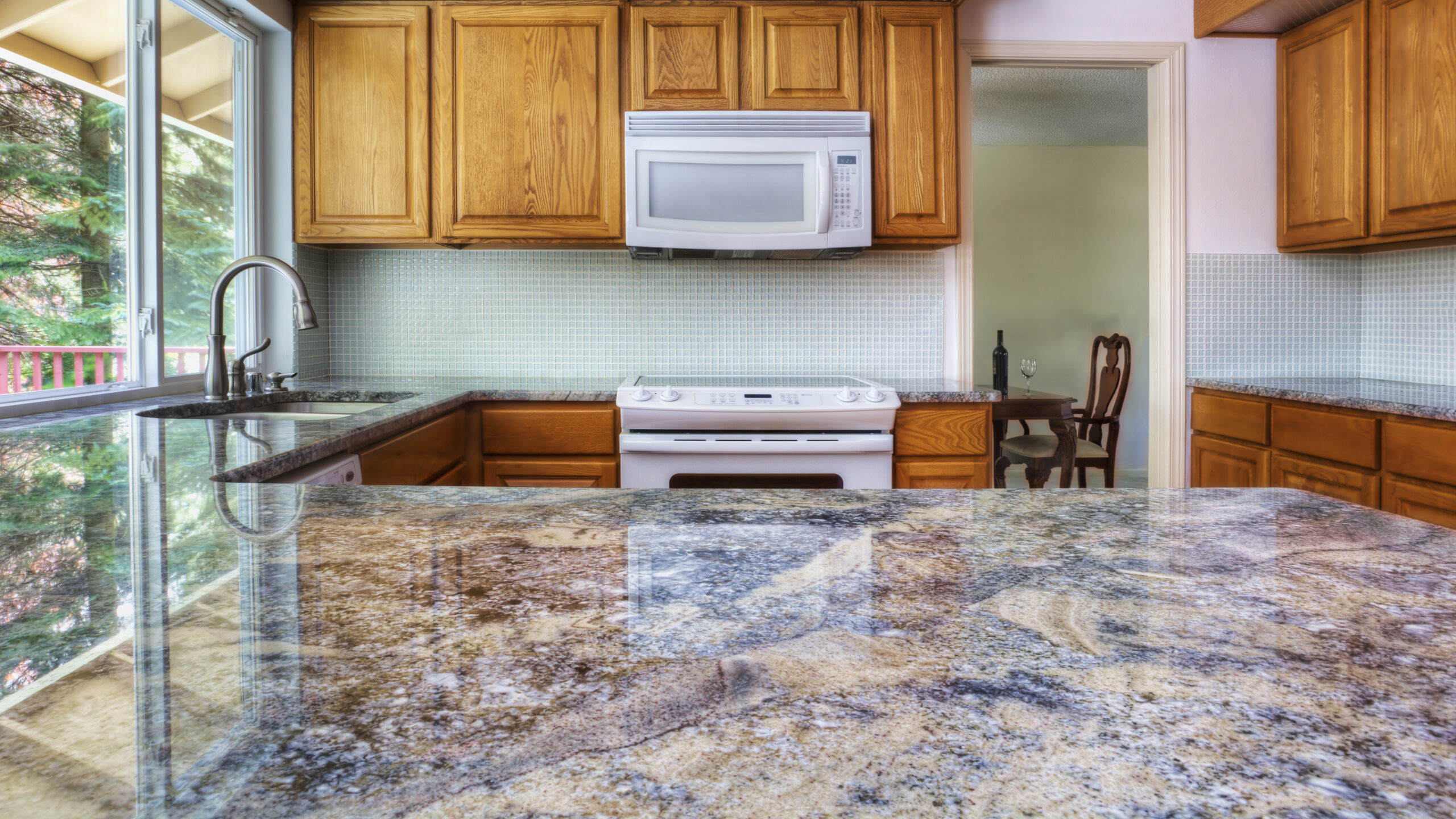
The countertop and backsplash occupy the most visually active zone of the kitchen: the strip of wall between the upper cabinets and the work surface where both materials meet. How these two surfaces relate visually determines whether the kitchen reads as cohesive or disconnected. A heavily patterned countertop paired with a complex backsplash tile competes for attention. A solid or subtly veined countertop with a more expressive backsplash creates a clear hierarchy that is easier to live with.

Joshua evaluates countertop and backsplash material selections together during the consultation so both decisions are made in the same light, in the same kitchen, with both samples visible at once. This is the only way to verify the pairing before any material is ordered.
Kitchen Countertop

How CountertopInstallation Works.

Countertop installation involves more coordination than a flooring project because the material is fabricated to the exact dimensions of your kitchen before installation day. The sequence is specific and each step matters.

Kitchen Countertop
Kitchen Countertop
Consultation and Material Selection

Joshua brings samples to your kitchen during the free in-home consultation. Material, edge profile, sink cutout type, and any special features are finalized at the consultation. This is when the countertop-to-backsplash relationship is also evaluated so both decisions are made together rather than sequentially.

Templating

After the material is selected and the project is confirmed, precise measurements and templates are taken of the countertop installation area. Templating captures the exact dimensions of the counter run, the sink location, any cooktop cutouts, and the details of any angled or non-standard sections. Template accuracy determines whether the fabricated slab fits correctly on installation day.

Fabrication

The slab is fabricated to the template dimensions: cut to size, edge profile applied, sink and cooktop cutouts made, and any polishing or finishing performed. Fabrication lead time varies by material and supplier but is typically one to two weeks after template. Joshua coordinates the fabrication timeline with your project schedule.

Removal of Existing Countertop

The existing countertop is removed and the cabinet substrate is prepared for the new installation. Any leveling, shimming, or substrate repair required to ensure a flat, supported surface for the new counter is addressed before the new slab arrives.

Installation and Finishing

The fabricated slab is set, seams are joined and polished where required, the sink is mounted and secured, and all cutout edges are finished. The backsplash tile installation follows the countertop installation in the project sequence so the tile installer can set the tile to the finished counter height rather than estimating. Joshua coordinates the sequence when both countertop and backsplash are in scope.

Kitchen Countertop

An Honest Recommendation Based on
How You Actually Use Your Kitchen.

The countertop sales conversation most homeowners experience goes one of two directions: the showroom sales person who steers toward a higher margin product regardless of fit, or the price-focused contractor who recommends whatever is easiest to source. Neither approach starts with the homeowner’s actual kitchen, their actual cooking habits, and the specific performance challenges of the Florida climate.

Joshua’s recommendation starts with those facts. If you are asking about marble and you describe a kitchen where you cook daily with citrus and tomato, he will tell you before the slab is ordered that marble will etch in those conditions and whether that is acceptable to you. If quartz makes more practical sense for your lifestyle but you love the look of granite, he brings both to the kitchen so you can make the decision with full information. The goal is a countertop you are still happy with in year eight, not a countertop that looked right in the showroom.

See Every Material in Your Kitchen Before Anything Is Ordered.

Joshua brings granite, quartz, quartzite, and laminate samples to your kitchen. You see each material against your cabinets, in your light, at the scale where the decision actually makes sense. Then you get an itemized quote before he leaves. No commitment until you have the numbers.

Kitchen Countertop
SERVICE AREA

Kitchen Countertop Installation Across Central Florida.

Elite Floor Crafters installs kitchen countertops throughout Ocala, Gainesville, The Villages, Citrus County, and surrounding Central Florida communities. Joshua brings material samples to your home so every selection decision is made in your actual kitchen before any slab is ordered or fabricated.

Call or text 352-520-9400 to schedule your free in-home consultation.

FAQs

Frequently Asked Questions About Kitchen Countertop Installation

What is the best countertop material for a Florida kitchen?

Quartz is the most practical choice for most Florida kitchens because it is non-porous, requires no sealing, and resists the citrus acids and humidity that affect natural stone. Granite is an excellent alternative for buyers who want natural stone character and are committed to annual sealing in Florida’s climate. Quartzite is the most durable natural stone option. Joshua evaluates your specific kitchen and cooking habits during the free consultation and gives you an honest recommendation.

Yes. Florida’s heat and humidity accelerate the breakdown of granite’s protective sealant faster than in dryer climates. Annual sealing is the correct maintenance schedule for granite in a Florida kitchen. Without regular sealing, granite becomes porous and susceptible to staining from the oils, citrus, and cooking acids common in Florida kitchens. Joshua discusses the maintenance commitment during the consultation so the decision is made with full information.

Quartz is engineered stone: ground quartz crystals bound with resin and pigment to create a consistent, non-porous surface. Quartzite is a natural metamorphic stone that is harder and more durable than marble. Quartz requires no sealing and resists acids. Quartzite requires sealing but is more acid-resistant than marble and offers the dramatic veining of natural stone. They are completely different materials that are frequently confused in the countertop market.

The consultation and material selection is completed during a single in-home visit. Templating takes one to two hours after the material is confirmed. Fabrication is typically one to two weeks depending on material and supplier. Installation day runs four to eight hours depending on the size of the kitchen and the complexity of the cutouts and seams. Joshua provides a realistic timeline covering all phases during the free consultation.

Yes. Countertop replacement without full cabinet replacement is one of the most cost-effective kitchen updates available. The existing cabinets serve as the substrate for the new countertop installation. If cabinet refacing is also a consideration, coordinating countertop replacement with a refacing project at the same time makes logistical and design sense. Joshua can scope and quote both together during the same consultation visit.

Countertop installation comes first in the sequence. Backsplash tile is then installed to the finished counter height, which allows the tile installer to set the first course of tile directly on the countertop surface and eliminate the gap management that estimating the counter height requires. If both are in scope for the same project, Joshua coordinates the installation sequence so the phases flow correctly without delays between trades.

Eased or slightly beveled edges are the most widely specified profiles for contemporary and transitional kitchens because they are clean, practical, and work with almost every cabinet style. Bullnose is a softer option suited to traditional kitchens and households with young children. Ogee adds formal decorative detail to traditional designs. Joshua brings edge profile samples to the consultation so the selection is made in context with the cabinet style and overall kitchen direction.