Florida commercial buildings on concrete slab have a persistent moisture management challenge that most Northern commercial flooring specifications do not account for. Concrete slab in Florida emits moisture vapor year-round, and the combination of that vapor with the humid ambient air that enters a commercial building every time a door opens creates conditions where pad-under-broadloom becomes a mold and mildew risk over time.
Commercial carpet tile with a hard-back or fiberglass-reinforced backing eliminates the pad layer entirely. The tile installs directly on the prepared slab, typically with a releasable broadcast adhesive that allows future tile removal without damaging the substrate. There is no pad to absorb and retain moisture. There is no air gap between the tile and the slab where humidity can condense.
For Florida commercial properties, this is not a premium specification. It is the correct one. Joshua evaluates slab moisture readings before specifying the adhesive system for any commercial carpet tile installation, and recommends backing types based on the actual conditions present in your building.
| Backing Type | Best Application | Florida Climate Notes |
|---|---|---|
Hard-Back / Fiberglass |
High-traffic offices, retail, corridors |
Preferred for Florida: no pad layer to trap moisture; dimensionally stable |
Cushion-Back / Attached Pad |
Conference rooms, private offices, lower-traffic areas |
More comfortable underfoot; greater moisture risk in humid environments; evaluate slab moisture before specifying |
Open-Cell Cushion (e.g., ecoworx) |
Offices with sustainability requirements, LEED projects |
Moisture-resistant open-cell construction; recyclable; preferred spec for green building projects |
PVC / Vinyl-Backed |
General commercial, healthcare-adjacent spaces |
Widely available, cost-effective; standard commercial spec; not preferred for LEED or sustainability projects |
Commercial carpet tile is classified by traffic class, a rating system that reflects the pile construction, fiber type, and wear layer’s ability to maintain appearance under foot traffic volume. Specifying the wrong traffic class in a commercial installation is one of the most common causes of premature appearance failure: the carpet looks worn and matted within two to three years of installation rather than the eight to twelve years the product is rated for under correct conditions.
Joshua specifies traffic class based on your facility type, the specific zones within your property, and the anticipated daily traffic volume before any product is selected or ordered.
| Facility / Space Type | Recommended Traffic Class | Installation Notes |
|---|---|---|
Private offices, conference rooms |
Class 2 (Moderate), Class 3 (Heavy) |
Cushion or hard-back both viable; pattern tiles add design interest |
Open-plan office floors |
Class 3 (Heavy), Class 4 (Very Heavy) |
Hard-back required under rolling chairs; raised-access floor compatible options available |
Corridors and high-traffic paths |
Class 4 (Very Heavy), Class 5 (Extremely Heavy) |
Solution-dyed fiber for stain resistance; dark colorway to minimize visible soiling |
Retail and showroom floors |
Class 3 to Class 4 |
Design flexibility of tile is a key advantage; pattern or plank tiles for visual interest |
Healthcare offices and clinics |
Class 3 to Class 4 |
Antimicrobial-treated fiber; hard-back for infection control; avoid cushion backing |
Education (classrooms, libraries) |
Class 3 (Heavy) |
Solution-dyed nylon for durability; acoustic benefit for open classroom environments |
Hospitality (hotel corridors, lobbies) |
Class 4 to Class 5 |
Pattern or textured tiles for design; broadcast adhesive for permanent installation |
Elite Floor Crafters sources commercial carpet tile from manufacturers whose products meet the durability, sustainability, and installation requirements of commercial property specifications in Central Florida. The brands Joshua installs are selected for consistent construction quality, fiber performance under commercial traffic, and backing systems appropriate for Florida’s climate conditions.
One of the underappreciated advantages of commercial carpet tile is the design capability the modular format enables. Tiles can be installed in multiple orientations and patterns, can mix colorways within the same installation to define zones or paths, and can create visual interest in a floor plan that broadloom cannot replicate without custom cutting and significant waste.
Monolithic (all tiles running the same direction) produces the appearance closest to broadloom. Quarter-turn (each tile rotated 90 degrees from adjacent tiles) hides directional wear in high-traffic areas and creates a subtle texture break. Brick-lay (offset like brick coursing) adds visual movement to large open floors. Ashlar (staggered by half-tile) adds a dimensional quality to the floor plane. The right pattern depends on the space, the tile design, and the visual direction of the project.
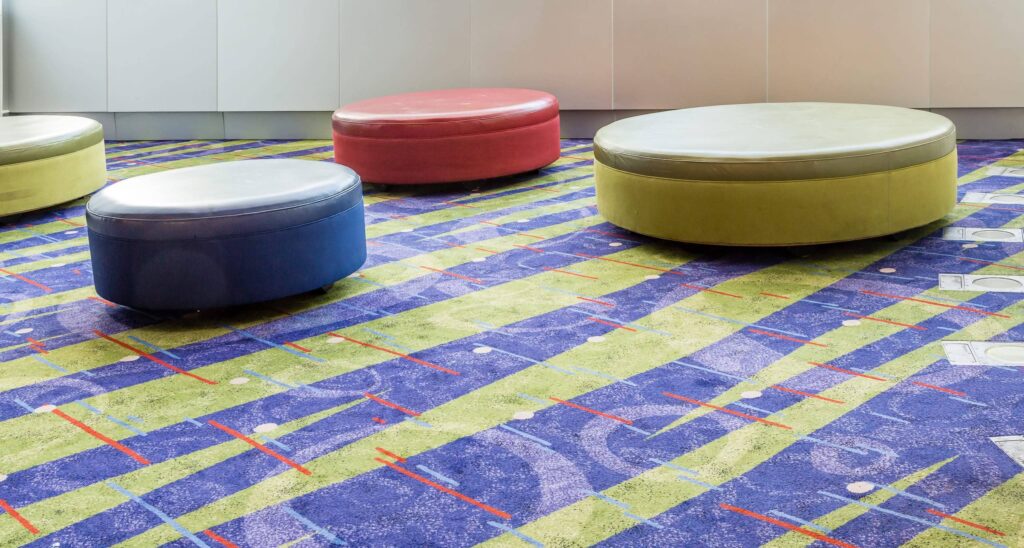
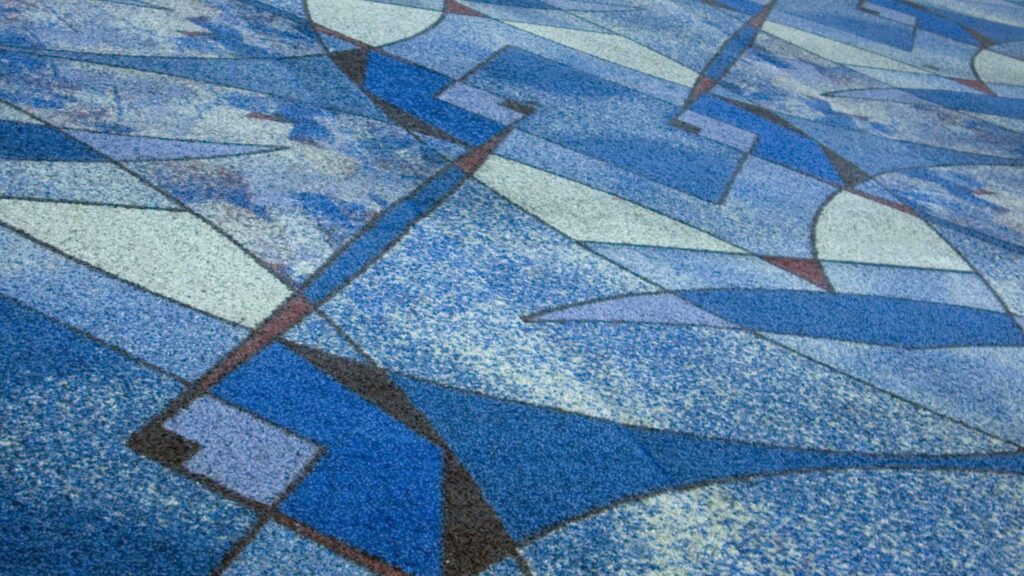
Carpet tile allows different zones of a commercial space to be defined by color or texture without requiring separate flooring products or installation phases. A corporate lobby can transition from a patterned tile in the reception area to a coordinating solid in the open office without a visible hard transition. Breakout rooms and conference areas can use accent tiles that anchor the space visually. Joshua brings samples from the confirmed product lines to the site so design decisions are made in the actual light of the space.
Commercial carpet tile installation is typically the most schedule-flexible flooring service Elite Floor Crafters offers. Phased installations allow occupied areas to remain in use while vacant sections are completed. Early-morning, evening, or weekend installation can be arranged for occupied spaces that cannot clear during business hours. Joshua discusses scheduling logistics during the initial site visit and provides a realistic project timeline before any work is committed.

Joshua visits the property before any product is specified. The on-site assessment covers: square footage and zone layout, subfloor condition and flatness, slab moisture vapor readings, existing floor removal if required, traffic patterns by zone, and scheduling requirements relative to occupancy. Product specification and project quote follow from the site assessment, not a phone estimate.

Commercial carpet tile requires a flat, clean slab within the manufacturer's tolerance for the specific product and adhesive system. High spots cause edge lifting over time. Contamination from previous adhesive residue affects bond. Existing flooring removal, slab grinding where needed, and moisture vapor barrier specification are handled before any tile is placed.

Commercial carpet tile layout starts from the center of the space, not the wall. Reference lines are snapped to the center point of the room so cut tiles at opposite edges are equal and the floor reads as centered and intentional from every sightline. Joshua establishes reference lines before any tile is placed and verifies the layout works with the room's actual dimensions before committing to adhesive.

Broadcast adhesive is applied with the correct trowel notch for the product and allowed to flash to the specified tack before tiles are set. Tiles are pressed firmly into contact and checked for alignment continuously throughout the installation. The releasable adhesive system used on most commercial carpet tile installations allows future tile removal and replacement without substrate damage.
All perimeter cuts are made cleanly and edges are covered with the appropriate commercial edge trim or transition strip where the carpet tile meets hard surface flooring, door thresholds, or raised-access floor panels. The installation is not considered complete until all edges are set and the floor is swept clean of adhesive residue and tile fragments.
Layout precision in a large open-plan office shows. A floor installed from an off-center reference line produces progressively wider or narrower cuts at the walls that are visible from every seat in the room. Adhesive applied with the wrong trowel notch produces a bond that begins to fail at the tile corners within the first year of foot traffic. Tile set before the adhesive has flashed to proper tack creates a floor that sounds hollow underfoot and does not stay flat.
Joshua brings commercial flooring experience to every carpet tile project: correct layout methodology, correct adhesive specification for Florida’s slab conditions, and installation technique that produces a floor that stays flat, stays bonded, and stays looking right for the life of the installation rather than the first inspection.
Joshua visits your property, assesses the subfloor, specifies the correct product and traffic class for each zone, and provides a full project quote. Installation is scheduled to minimize disruption to your operations. Call or text to arrange a site visit.
Elite Floor Crafters installs commercial carpet tile in offices, retail spaces, healthcare facilities, educational buildings, and hospitality properties throughout Ocala, Gainesville, The Villages, Citrus County, and surrounding Central Florida communities. Project estimates are provided after an on-site assessment of your property.
Call or text 352-520-9400 to arrange a site visit and get a project timeline. For larger commercial projects, email is preferred for initial scoping: elite@elitefloorcrafters.com.
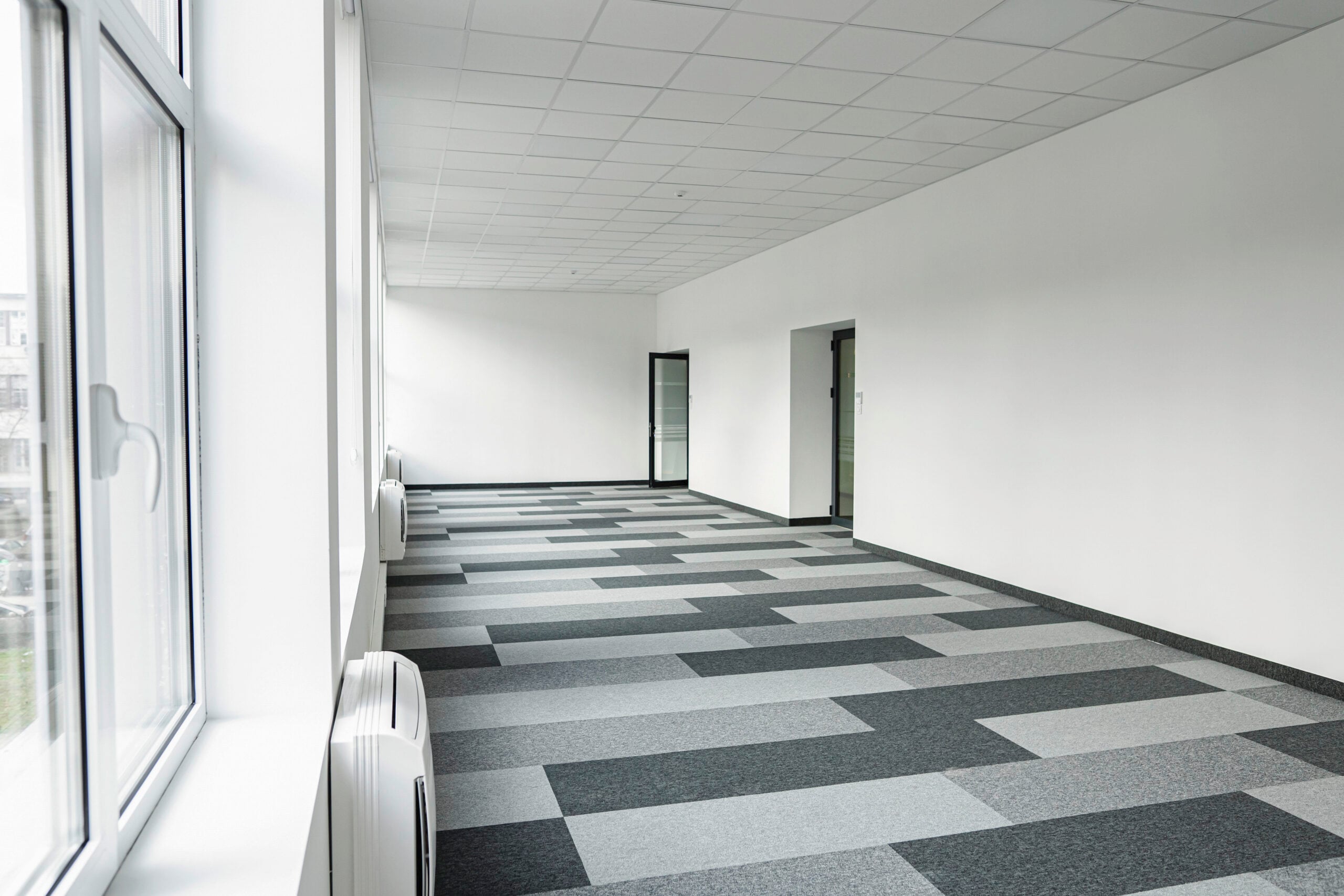
Commercial carpet tile is a modular flooring product manufactured in individual squares (typically 18×18 or 24×24 inches) with hard-back or cushion backing. Unlike residential broadloom, individual tiles can be removed and replaced without disturbing the surrounding floor. Commercial tile is rated by traffic class, with construction specifications designed for the foot traffic volumes and rolling loads of commercial environments.
Commercial carpet tile with a hard-back or fiberglass-reinforced backing is the preferred specification for Florida commercial buildings on concrete slab. Hard-back tile installs directly on the slab without a pad layer, eliminating the moisture-trapping risk that causes mildew and odor under pad-over-broadloom in Florida’s humid climate. Joshua specifies backing type and adhesive system based on actual slab moisture readings at your property.
Yes. This is one of carpet tile’s primary operational advantages over broadloom. Phased installation allows Joshua to work in sections of the property while other areas remain occupied and in use. Furniture can be relocated zone by zone rather than completely cleared. Early-morning, evening, or weekend scheduling is available for occupied spaces that cannot be vacated during business hours. Discuss your occupancy schedule during the initial site visit.
Open-plan offices and primary corridors with high daily foot traffic and rolling chair loads require Class 3 (Heavy) to Class 4 (Very Heavy) carpet tile. Private offices and conference rooms with lighter traffic can use Class 2 (Moderate) to Class 3 (Heavy). Specifying the correct class prevents premature appearance failure. Joshua specifies traffic class per zone based on your facility layout and anticipated traffic volume.
A 2,000 to 3,000 square foot commercial installation typically runs two to three days including subfloor preparation and adhesive cure time. Larger properties are phased to match your occupancy schedule. Joshua provides a realistic project timeline after the on-site assessment so you can plan around the installation without surprises.
Yes. This is the primary maintenance advantage of carpet tile over broadloom. Releasable adhesive allows individual damaged tiles to be removed without disturbing surrounding tiles. Replacement tiles from the same product run are installed in the same position. Maintaining a small inventory of tiles from the original installation is standard practice. Joshua can advise on the quantity to keep on hand based on your facility size and traffic patterns.
Yes. Existing carpet and pad removal is available as part of any carpet tile installation project or as a standalone service. Removal exposes the slab for moisture testing and any needed preparation before new tile goes down. Adhesive residue from previous installations is also addressed as part of subfloor preparation. Confirm whether removal is included in your project quote during the initial site visit.











Broadloom commercial carpet installs as a continuous surface. When a section is damaged, stained beyond cleaning, or worn out under a high-traffic path, the options are: live with it, patch it visibly, or re-install the entire floor. For a property that stays open during business hours, none of these options are good.
Carpet tile is modular by design. Each tile is a discrete unit, typically 18 by 18 or 24 by 24 inches, that installs individually and can be removed and replaced the same way. A damaged tile from a spill, a rolling chair, or years of traffic in a specific corridor comes out. A replacement tile goes in. The surrounding floor stays undisturbed and the business stays open throughout.
That operational advantage drives the majority of commercial carpet tile specifications. It is why property managers, facilities directors, and commercial building owners have shifted substantially toward carpet tile over broadloom in the past two decades, and why most commercial carpet manufacturers now offer their primary product development in tile format.