A floor removal company does more than rip out old flooring — the right one protects your subfloor, controls dust, and sets up your whole remodel to succeed. If you’ve ever pried up a corner of tile yourself and found a cracked slab or hidden moisture underneath, you already know why this step matters. Too many homeowners treat demolition as an afterthought, then pay for it later in delays, damaged concrete, or a subfloor that won’t hold new material.
The short answer: a qualified crew evaluates the existing floor, chooses the correct removal method for that material, contains dust and debris, and inspects the subfloor before anything new goes down. That’s true whether you’re pulling up carpet in Ocala, tile in Gainesville, or a failed vinyl floor in Leesburg. Skipping a professional evaluation is the single most common reason remodels stall midstream.
In this guide, we’ll walk through what a professional crew actually does, how basement and concrete removal differ from standard tear-outs, and how to compare DIY against hiring a pro. We’ll also answer the questions homeowners across our Central Florida service area ask us most.
📌 Key Takeaways
- A professional floor removal company protects your subfloor and checks for moisture or structural damage before installation begins.
- Concrete and basement floor removal require different tools than a standard carpet or vinyl tear-out.
- Dust-minimized removal methods matter for indoor air quality, especially in occupied homes.
- DIY removal can save labor cost but often risks subfloor damage that costs more to repair.
- Ask any floor removal near me candidate about disposal, dust control, and subfloor inspection before you sign.
Jump to a section:
- What a Floor Removal Company Actually Does
- Signs You Need Professional Floor Removal Near Me
- Basement Floor Removal: Special Challenges
- Concrete Floor Removal: Tools and Techniques
- DIY vs. Professional: Cost and Time Comparison
- What to Expect During the Project
- Choosing the Right Floor Removal Company
- Frequently Asked Questions
What a Floor Removal Company Actually Does
Quick Answer: A professional crew assesses the existing material, selects the correct removal method, contains dust and debris, and checks the subfloor before your new floors go in. It’s a diagnostic step as much as a demolition one.
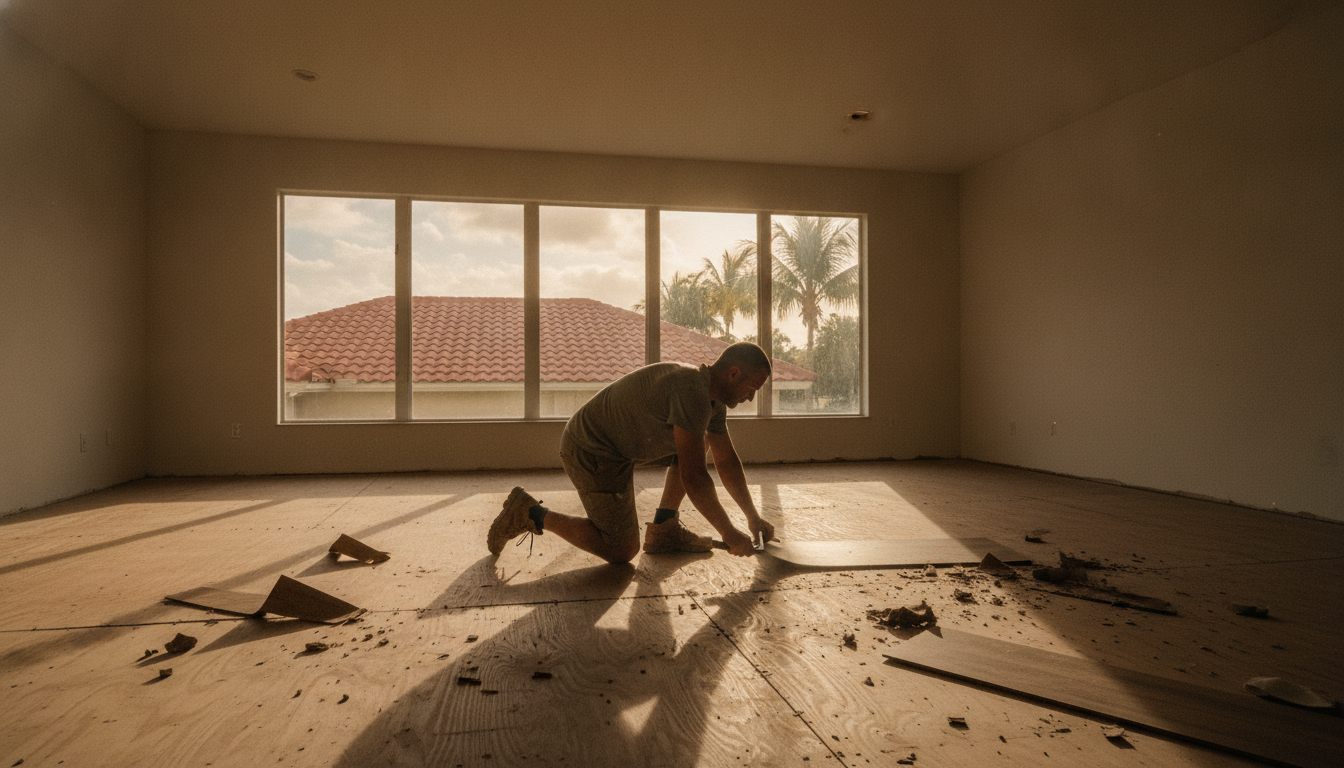
Most homeowners picture a crowbar and a dumpster, but there’s more happening under the surface. Before any tear-out begins, an experienced team identifies the flooring type — tile, hardwood, carpet, laminate, or vinyl — because each one demands a different approach. Old adhesive, for example, can bond so aggressively to concrete that improper removal cracks the slab.
💡 Expert Insight: We’ve walked into homes in Belleview and Summerfield where a well-meaning DIY attempt gouged the subfloor so deeply that leveling compound alone couldn’t fix it. Catching that early saves thousands later.
Common Flooring Types We Remove
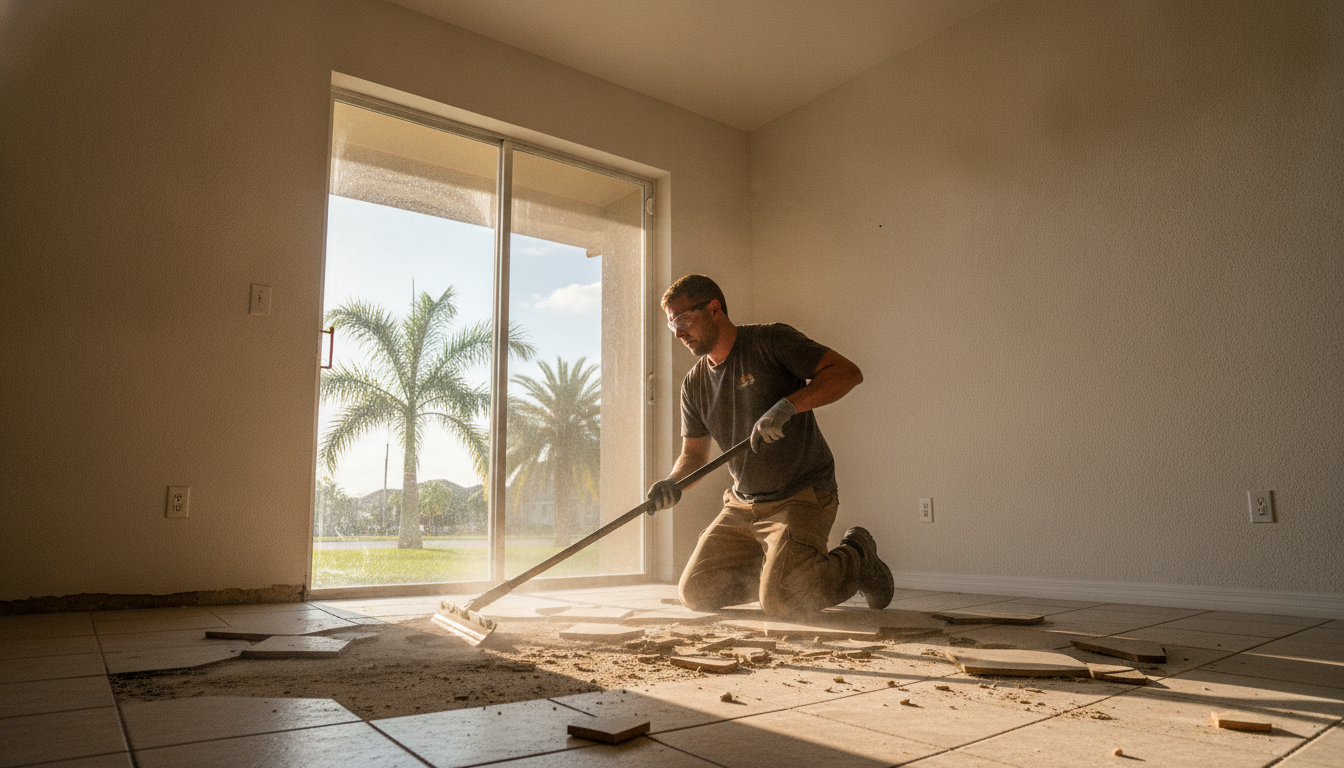
Every material has its own removal profile. Carpet and pad usually come up fast with hand tools. Tile and stone require chipping hammers or mechanical scrapers. Glued-down hardwood and old vinyl composition tile (VCT) are the most labor-intensive, since adhesive residue has to be fully cleared for the next flooring to bond properly.
For a deeper look at how removal missteps damage concrete, our post on professional floor removal and concrete damage breaks down real examples we’ve seen in the field.
Signs You Need Professional Floor Removal Near Me
Quick Answer: If your flooring is glued down, cracked, water-damaged, or older than a decade, a professional evaluation beats guessing. Searching floor removal near me is smart once DIY tools stop making progress.
Curling vinyl, spongy spots underfoot, or tile that sounds hollow when tapped are all signals that something beneath the surface needs attention. In humid Central Florida counties like Marion and Alachua, moisture intrusion under old flooring is common and not always visible until removal begins.
⚠️ Common Mistake: Homeowners often assume a musty smell is just an old carpet issue. In reality, it can point to trapped moisture that has already started affecting the subfloor — something only becomes clear once the flooring is pulled up.
When a Quick DIY Attempt Turns Into a Bigger Job
We’ve had clients in Gainesville start a weekend project, hit glued-down VCT tile, and call us after realizing the adhesive contains materials that shouldn’t be sanded without proper precautions. Older tile and adhesive can sometimes contain asbestos, which the EPA’s asbestos guidance explains should only be disturbed following specific safety protocols. That’s one of the clearest signs it’s time to bring in a professional floor removal company rather than continue solo.
Basement Floor Removal: Special Challenges
Quick Answer: Basement floor removal deals with below-grade moisture, limited ventilation, and often older, harder concrete. It typically takes longer than a standard first-floor tear-out.
While true basements are less common in Florida homes than in northern states, some properties in our service area — particularly older builds around Mount Dora and Eustis — do have below-grade or partially below-grade slabs. These spaces trap humidity, which means any removal work has to account for moisture readings before new flooring is installed.
Moisture and Mold Considerations
Moisture trapped beneath old flooring can lead to mold growth if it’s not addressed before the new install. A qualified crew tests the slab’s moisture content and, if needed, recommends a vapor barrier or moisture mitigation coating before moving forward. Skipping this step is one of the fastest ways to void a flooring warranty on the new material.
📊 Data Point: According to the EPA’s guidance on mold and moisture control, moisture is one of the leading contributors to indoor air quality problems in residential renovations, reinforcing why subfloor moisture checks matter before any new flooring goes down.
Concrete Floor Removal: Tools and Techniques
Quick Answer: Concrete floor removal usually means grinding, scraping, or shot-blasting away old adhesive and coatings rather than breaking the slab itself, unless the concrete is being replaced entirely.
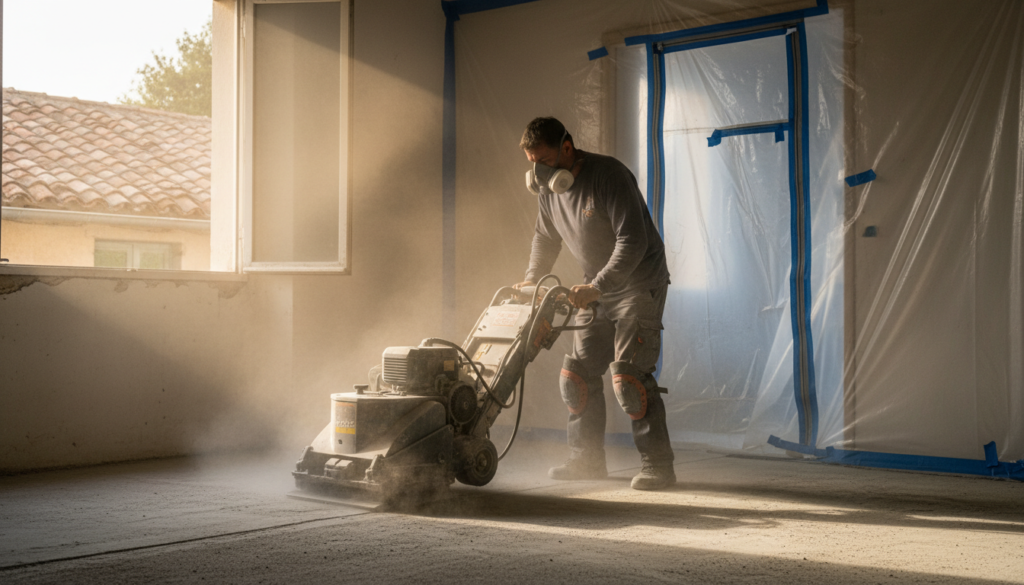
Most concrete floor removal projects aren’t about demolishing the slab — they’re about stripping what’s on top of it: old tile mastic, paint, epoxy, or vinyl adhesive. Mechanical scrapers and diamond grinders do this work without damaging the structural slab underneath, provided the operator knows how much pressure the surface can handle.
EZ-Out and Lift-Off Tools Explained
Homeowners sometimes ask about EZ-Out floor removal or Lift-Off floor removal products they’ve seen marketed as DIY adhesive strippers. These chemical and mechanical aids can loosen certain adhesives, but they work best as a supplement to proper mechanical scraping, not a replacement for it. A professional crew knows which product pairs with which adhesive type, so the slab isn’t over-saturated or etched.
✅ Quick Tip: Cutting or grinding concrete generates fine silica dust, which the OSHA silica standard identifies as a respiratory hazard requiring dust suppression or respiratory protection — one more reason this work is best left to an equipped crew.
| Removal Method | Best For | Typical Time | DIY-Friendly? |
|---|---|---|---|
| Hand scraping | Small tile or carpet areas | 1-2 days | Yes, with patience |
| Mechanical scraper/grinder | Glued-down tile, VCT, concrete coatings | 1-3 days | No — specialized equipment |
| Chipping hammer | Ceramic or stone tile | 2-4 days | Limited, heavy labor |
| Chemical adhesive removers (EZ-Out, Lift-Off) | Stubborn adhesive residue | Varies | Supplemental use only |
DIY vs. Professional: Cost and Time Comparison
Quick Answer: DIY removal can lower upfront labor cost, but it often trades away speed, dust control, and subfloor protection — all of which affect the final remodel budget.
A weekend DIY tear-out feels satisfying, and for a small carpeted room, it’s genuinely doable. Larger rooms, tile, or concrete work are a different story. We’ve seen well-intentioned homeowners in Clermont spend three weekends on a job our crew finishes in a day and a half, partly because rental equipment isn’t the same as commercial-grade tools.
Weighing Hidden Costs
Beyond time, consider disposal fees, tool rental, and the risk of subfloor damage. A cracked slab or gouged plywood subfloor can add hundreds of dollars to a project that looked like it would save money. Professional crews also carry the liability and cleanup responsibility, which matters if debris removal isn’t included in your rental agreement.
💡 Expert Insight: In our experience, the homeowners happiest with their remodel are the ones who treated removal as part of the installation budget, not a separate DIY line item to shrink.
For readers weighing what comes next after removal, our guide on new flooring installation options covers materials that hold up well in Florida’s humidity.
What to Expect During the Project
Quick Answer: Expect an on-site evaluation, a written scope of work, dust containment setup, removal and disposal, and a subfloor inspection before installation begins.
A typical project starts with a walkthrough where the crew identifies flooring type, checks for moisture, and flags any areas of concern. From there, you’ll get a clear scope — what’s being removed, how debris is hauled away, and roughly how long the work will take.
Dust Control and Site Protection
Dust containment is where experience really shows. Plastic sheeting, negative-air equipment, and staged removal keep debris from spreading into living spaces you’re not renovating. Our approach follows the same dust-minimized principles outlined in our post on fast, dust-minimized floor removal, which many Ocala and Belleview clients ask about directly.

Choosing the Right Floor Removal Company
Quick Answer: Look for a floor removal company that inspects before quoting, explains its dust control process, and includes subfloor evaluation as a standard part of the job — not an upsell.
Price matters, but for homeowners who value long-term craftsmanship over the lowest bid, the real questions are about process. Ask how debris is disposed of, whether the crew checks moisture levels, and what happens if they find damage mid-project.
Questions Worth Asking Before You Hire
- Do you inspect the subfloor before and after removal?
- How do you contain dust in occupied homes?
- What’s included in your written estimate — disposal, labor, and inspection?
- Can you show examples of past basement or concrete floor removal work?
- How soon can you schedule around my new flooring installation?
⚠️ Common Mistake: Choosing a crew based solely on the lowest quote, without asking what’s excluded, is how homeowners end up with surprise fees for disposal or subfloor repair mid-project.
If you’re planning a kitchen or bathroom remodel alongside your removal, it’s worth coordinating timelines early — see our kitchen remodeling page for how flooring and cabinetry work fit together.
Frequently Asked Questions
How much does professional floor removal cost?
Costs vary by material and square footage, but most professional floor removal projects are priced by the square foot, with tile and concrete work costing more than carpet or laminate due to labor intensity. Getting an on-site quote is the most accurate way to know your number.
How long does floor removal take before new flooring can be installed?
A standard room typically takes one to three days depending on material, with concrete floor removal or basement floor removal projects sometimes taking longer due to moisture testing and drying time. Your contractor should give you a written timeline before work starts.
Is it safe to remove old tile flooring myself?
Small areas of newer tile can often be removed safely with basic tools, but older tile and adhesive may contain asbestos, which the EPA advises should not be disturbed without proper precautions. When in doubt, a professional evaluation is the safer route.
What is the difference between basement floor removal and standard floor removal?
Basement floor removal deals with below-grade moisture and often harder, older concrete, requiring moisture testing that a standard first-floor tear-out may not need. This extra step helps prevent mold or adhesive failure in the new flooring.
Do I need to hire a separate floor removal company or can my flooring installer handle it?
Many flooring installers, including full-service companies, handle removal and installation together, which simplifies scheduling and keeps one team accountable for the whole project. Ask your installer directly whether removal is included in their process.
What should I look for in a floor removal near me search result?
Look for reviews mentioning dust control, subfloor inspection, and clear written estimates rather than just low prices. A company that explains its process in detail is usually more transparent about hidden costs.
Can concrete floor removal damage my slab?
Improper technique — like aggressive jackhammering when grinding would do — can chip or crack a structurally sound slab. Experienced crews match the removal method to the coating and slab condition to avoid unnecessary damage.
Final Thoughts
Choosing the right floor removal company sets the tone for everything that follows in your remodel, from subfloor integrity to how clean your home stays during the process. Whether you’re dealing with basement floor removal in an older Mount Dora property, concrete floor removal in a Gainesville garage conversion, or a straightforward carpet tear-out in Leesburg, the fundamentals stay the same: inspect first, remove correctly, and protect what’s underneath. As of 2026, dust control and moisture testing remain the two most overlooked steps homeowners regret skipping. A little diligence upfront saves real money later.
Next steps:
- Walk through your space and note flooring type, age, and any soft or hollow spots.
- Ask candidate contractors the five questions listed above before comparing quotes.
- Confirm disposal, dust control, and subfloor inspection are included in writing.
- Schedule removal with enough buffer time before your new flooring installation date.
Elite Floor Crafters is a licensed and insured flooring contractor serving Ocala, Gainesville, Leesburg, Belleview, Summerfield, and surrounding Central Florida communities. Ready to get your project started? Request a free quote and let’s talk through your removal and flooring plans together.