If you’re typing "electric floor scraper rental near me" into a search bar at 9 p.m. with a pry bar in one hand, you’re not alone. The short answer: renting an electric floor scraper can save money on a small, single-room project, but it comes with real risks the moment the job grows bigger or the flooring underneath is unknown. This guide breaks down what these machines do, what a long handle floor scraper or SDS plus floor scraper actually costs to rent around Ocala and Gainesville, and when hiring a professional floor removal crew becomes the smarter investment.
We’ve spent years pulling up old tile, glued-down vinyl, and stubborn hardwood adhesive across Marion, Lake, Alachua, and Hernando counties. We’ve also walked into plenty of homes where a weekend rental turned into a much bigger repair bill. Consider this the honest, no-sales-pitch version of the conversation we’d have with you in your own living room.
📌 Key Takeaways
- Electric floor scraper rentals near Ocala, Gainesville, and Leesburg typically run $50–$120 per day, plus a deposit.
- An SDS plus floor scraper handles small tile or thinset jobs but struggles with glued VCT or old hardwood adhesive.
- A long handle floor scraper reduces back strain but still demands serious physical effort over large rooms.
- Homes built before 1980 may contain asbestos flooring — never scrape before professional testing.
- Elite Floor Crafters offers dust-minimized professional floor removal throughout our Central Florida service area.
Jump to a section:
- What Is an Electric Floor Scraper, Really?
- Where to Find Rentals Near You
- DIY Rental Costs, Time, and Hidden Risks
- DIY vs. Professional Floor Removal Compared
- When It’s Time to Call a Professional
- What Professional Floor Removal Actually Looks Like
- FAQ
What Is an Electric Floor Scraper, Really?
Quick Answer: An electric floor scraper is a powered tool that drives a flat blade under flooring material to break its bond with the subfloor. It replaces hours of manual chiseling with mechanical force, but it still takes practice to use without gouging what’s underneath.
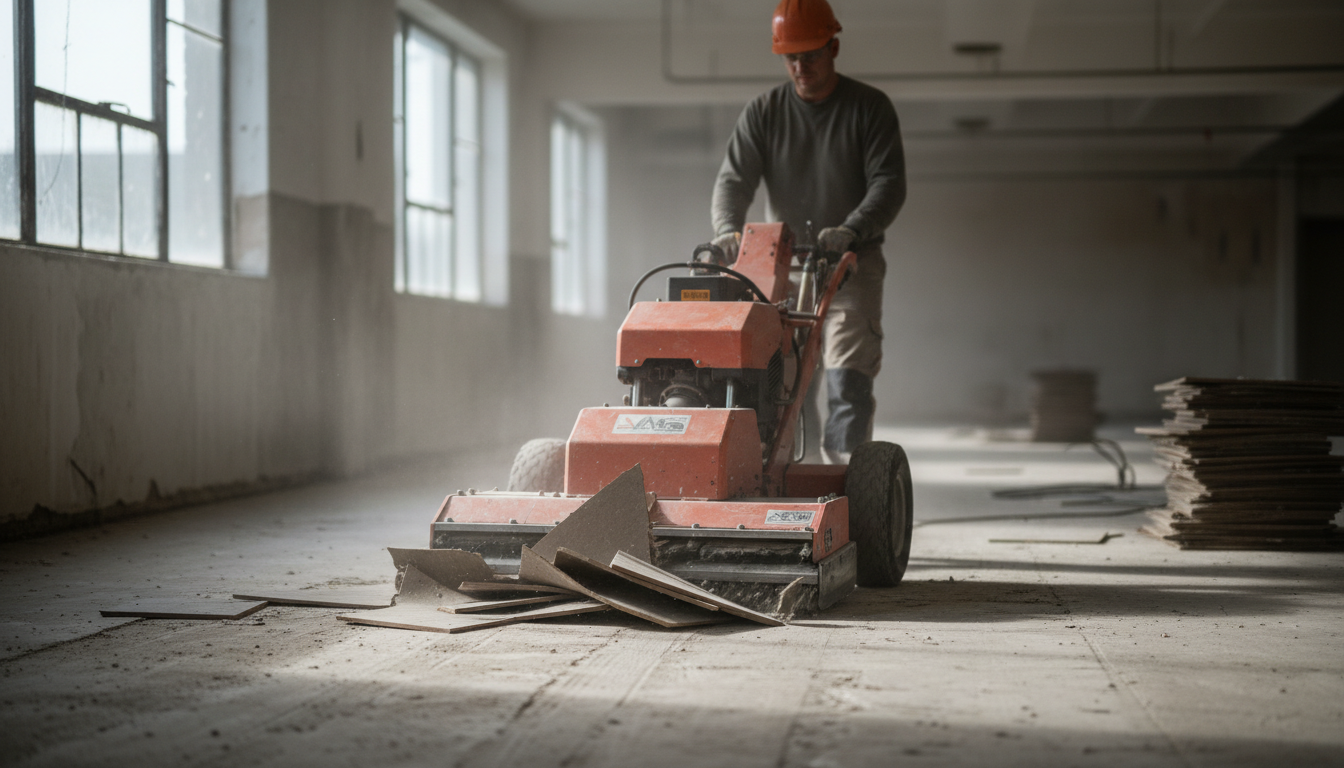
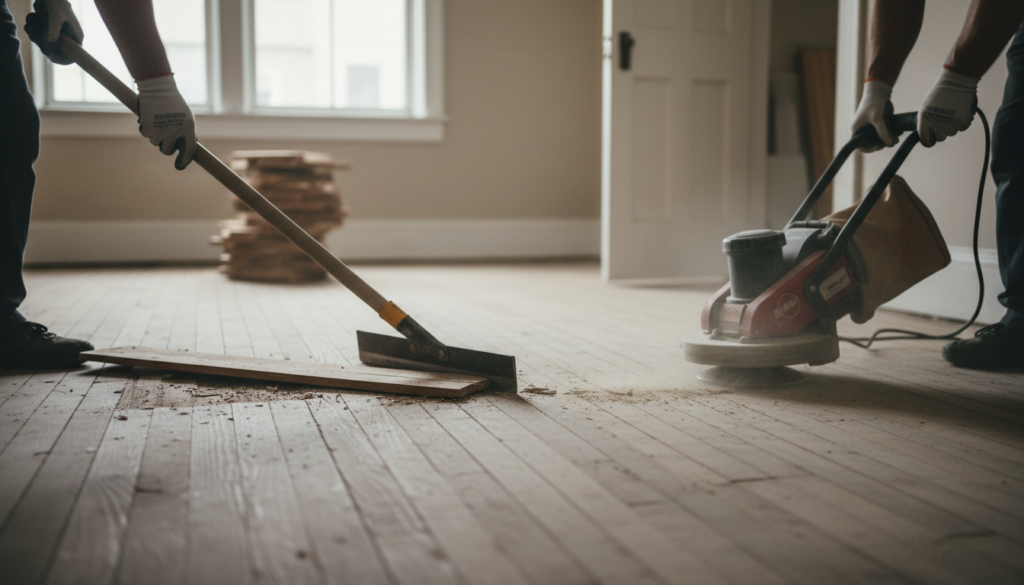
Most rental-counter models fall into two families. Handheld electric scrapers look like a heavy-duty reciprocating saw with a wide chisel tip, good for tile, thinset, or mastic in tight spots. Walk-behind units cover more square footage per hour but are harder to maneuver around cabinets, closets, and stair transitions.
SDS Plus Floor Scraper vs. Long Handle Floor Scraper
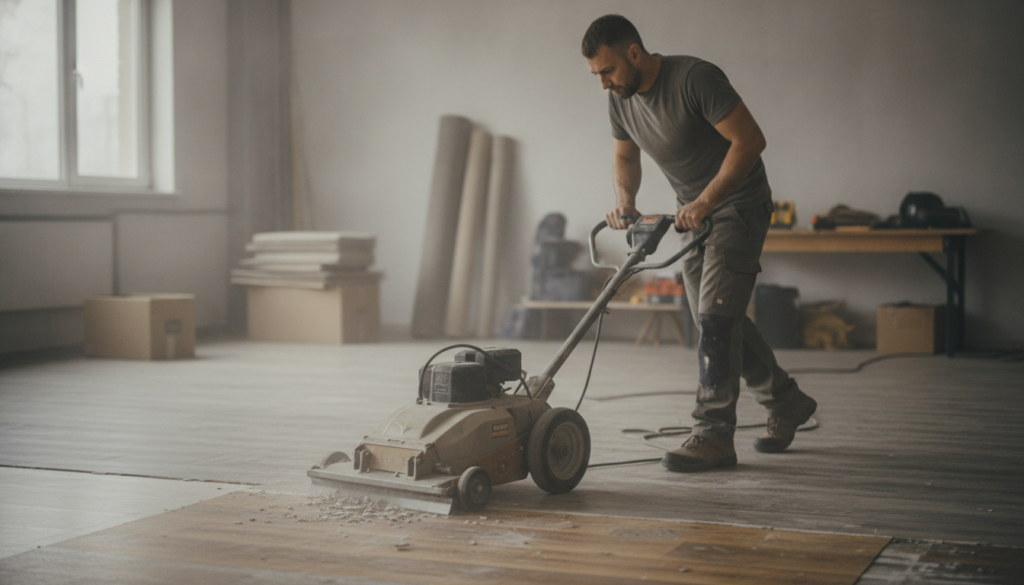
An SDS plus floor scraper is a rotary hammer drill fitted with a scraper-shaped bit through the SDS-plus chuck system (a quick-change fitting common on hammer drills). It’s compact and useful for small areas of tile or thinset but generates real vibration, which is hard on wrists over a full day. A long handle floor scraper, by contrast, is a manual or lightly powered tool with an extended shaft that lets you push with your legs and body weight instead of your lower back — better ergonomics, but slower on large glued installations.
✅ Quick Tip: If you’re only removing a small hallway of ceramic tile, a rented SDS plus floor scraper attachment is often enough. For anything larger, the math starts favoring professional help.
Where to Find Rentals Near You
Quick Answer: Most homeowners in our service area find electric floor scraper rentals through national equipment rental chains and local hardware stores in Ocala, Gainesville, Leesburg, and Mount Dora. Availability and daily rates vary quite a bit by location and season.
If you live in Belleview, Spring Hill, or Summerfield, expect to drive 20–30 minutes to the nearest rental counter with the right equipment in stock. Weekends book up fast during spring remodeling season, so call ahead rather than assuming a walk-in rental is guaranteed.
📊 Data Point: According to the U.S. Consumer Product Safety Commission, power tool-related injuries send tens of thousands of people to emergency rooms every year, many involving unfamiliar rental equipment used without proper training.
Rental staff can show you how the trigger and blade angle work, but they generally aren’t trained to assess what’s actually glued to your subfloor. That gap is where a lot of DIY floor removal projects go sideways.
DIY Rental Costs, Time, and Hidden Risks
Quick Answer: A one-day electric floor scraper rental typically costs $50–$120, but the real cost is time, physical strain, and the risk of damaging a subfloor you’ll need to repair before new flooring goes down.
A single 12-by-12 room of glued-down vinyl can realistically take a full weekend for one person working alone, especially if the adhesive has aged for a decade or more. Add a second day if you hit an unexpected layer of old linoleum or mastic underneath.
Hidden Risks Worth Knowing Before You Rent
The biggest hidden risk isn’t the tool — it’s what’s under the flooring. Older homes across Alachua and Marion counties sometimes have flooring installed before 1980, which may contain asbestos-containing materials.
⚠️ Common Mistake: Renting a scraper and getting to work before testing older flooring for asbestos is one of the most common — and most dangerous — DIY mistakes we see. The EPA’s guidance on asbestos explains why disturbing these materials without proper precautions can release fibers into the air.
Beyond material hazards, an aggressive blade angle on a rented scraper can gouge plywood subfloor, which then needs patching or replacement before new flooring is installed — an expense that quickly erases the money saved on the rental itself.
DIY vs. Professional Floor Removal Compared
Quick Answer: DIY rental works best for small, single-material rooms with no hazard concerns. Professional floor removal makes more sense for larger areas, older homes, or multiple flooring layers.
| Factor | DIY Electric Floor Scraper Rental | Professional Floor Removal |
|---|---|---|
| Best for | Small rooms, single material | Whole homes, multiple layers |
| Typical cost | $50–$120/day rental + your time | Project-based quote, often comparable once labor and repairs are counted |
| Time investment | 1–3 full days for one room | Often completed in a single day |
| Subfloor risk | Higher, especially for first-timers | Lower, handled by experienced crews |
| Hazard testing | Not included | Assessed before work begins |
| Cleanup | Your responsibility | Dust-minimized process included |
💡 Expert Insight: We’ve seen homeowners rent a scraper to save a few hundred dollars, then spend more than that repairing gouged plywood before new luxury vinyl plank or hardwood could even be installed. It’s worth pricing both routes before committing.
When It’s Time to Call a Professional
Quick Answer: Call a professional floor removal team if your home was built before 1980, you’re covering more than one or two rooms, or you’ve found more than one layer of old flooring material.
Professionals bring more than muscle. A trained crew recognizes the difference between simple tile mastic and older cutback adhesive, which can require different removal methods and, in some cases, testing before work begins.
Silica Dust and Safety Standards
Grinding or scraping certain flooring materials can generate fine dust. The Occupational Safety and Health Administration sets exposure standards for respirable crystalline silica on construction sites, a rule most homeowners have never heard of but that licensed contractors are required to follow.
🔧 If you’re already unsure whether your flooring might contain hazardous material, that uncertainty is itself a signal to bring in a professional rather than guess with a rented scraper.
We’ve documented this exact decision point in our post on professional floor removal and concrete damage, which walks through what happens when DIY removal goes wrong on a concrete slab.
What Professional Floor Removal Actually Looks Like
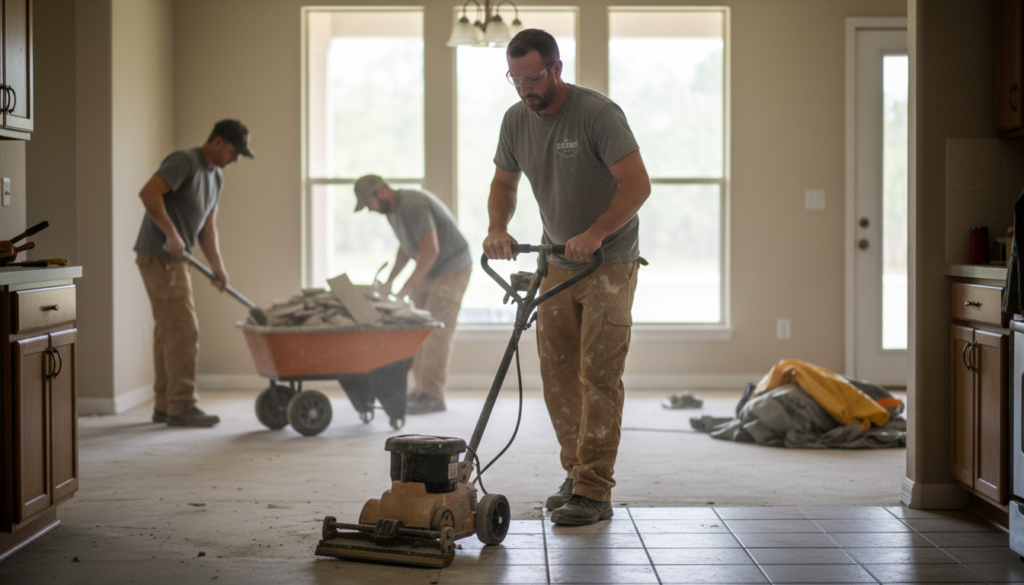
Quick Answer: A professional floor removal visit from Elite Floor Crafters starts with an assessment of your existing flooring, moves through careful material removal, and includes a dust-minimized cleanup so your home stays livable during the process.
I’ve walked into more than one Ocala living room where a rented electric floor scraper gouged the plywood subfloor beyond simple patching. In those cases, what should have been a straightforward flooring swap turned into a subfloor replacement project — adding both time and cost that a professional assessment would have caught up front.
Our flooring removal service is built specifically to avoid that outcome. We evaluate the material, the subfloor condition, and any age-related hazards before a single blade touches your floor. For homeowners in Leesburg, Mount Dora, or Gainesville planning a full remodel, we also detail our approach in fast, dust-minimized floor removal.
✅ Quick Tip: If you’re already planning new flooring afterward, bundling removal and installation with one crew usually costs less — and takes less of your calendar — than managing two separate projects.
Once old material is out, we help homeowners across our service area choose what goes down next, whether that’s luxury vinyl plank or a hardwood alternative suited to Florida’s humidity. You can start that conversation any time through our free quote request.
FAQ
Where can I find an electric floor scraper rental near me?
National equipment rental chains and local hardware stores in Ocala, Gainesville, Leesburg, and Mount Dora typically stock electric floor scrapers. Call ahead, since availability shifts with remodeling season and weekend demand.
How much does it cost to rent an electric floor scraper?
Expect to pay roughly $50 to $120 per day, depending on the model and location, plus a refundable deposit. Larger walk-behind units usually cost more than handheld models.
What is the difference between an SDS plus floor scraper and a long handle floor scraper?
An SDS plus floor scraper is a rotary hammer drill fitted with a scraping bit, best for small tile or thinset removal. A long handle floor scraper uses body weight through an extended shaft, offering better ergonomics for larger, manual jobs.
Can I remove flooring myself without a scraper rental?
Yes, for very small areas hand scrapers and heat guns can work, but they take significantly longer than powered tools. Most homeowners tackling more than one room find a rental or professional crew far more time-efficient.
How do I know if my old flooring contains asbestos?
You can’t tell by looking — flooring installed before the 1980s should be tested by a qualified lab before any scraping begins. The EPA’s asbestos resources explain testing and safe handling in more detail.
Is it cheaper to rent a scraper or hire a professional floor removal company?
Renting looks cheaper upfront, but subfloor repairs from DIY mistakes often close that gap. A quote from a professional floor removal team gives you an apples-to-apples comparison before you decide.
Does Elite Floor Crafters serve my area for floor removal?
We serve homeowners throughout Marion, Lake, Alachua, and Hernando counties, including Ocala, Gainesville, Leesburg, Belleview, and Spring Hill. Reach out through our contact page to confirm service in your specific city.
The Bottom Line
An electric floor scraper rental near me search is usually the first step toward a bigger decision: handle removal yourself, or bring in a crew that does this every week. Small, single-material rooms are reasonable DIY territory if you’re comfortable with the physical work and confident there’s no hidden hazard underneath. Larger jobs, older homes, or multiple flooring layers tip the scale toward professional floor removal, where the cost often evens out once subfloor repairs are avoided.
Next steps if you’re deciding right now:
- Identify your home’s approximate flooring installation date to flag possible asbestos concerns.
- Measure the square footage to estimate realistic DIY time and rental days needed.
- Get a no-obligation quote to compare against your rental cost estimate.
- Choose the option that fits your timeline, budget, and comfort with physical labor.
Ready to skip the guesswork? Request your free flooring quote and let our team assess your project before you spend a weekend behind a rented scraper.