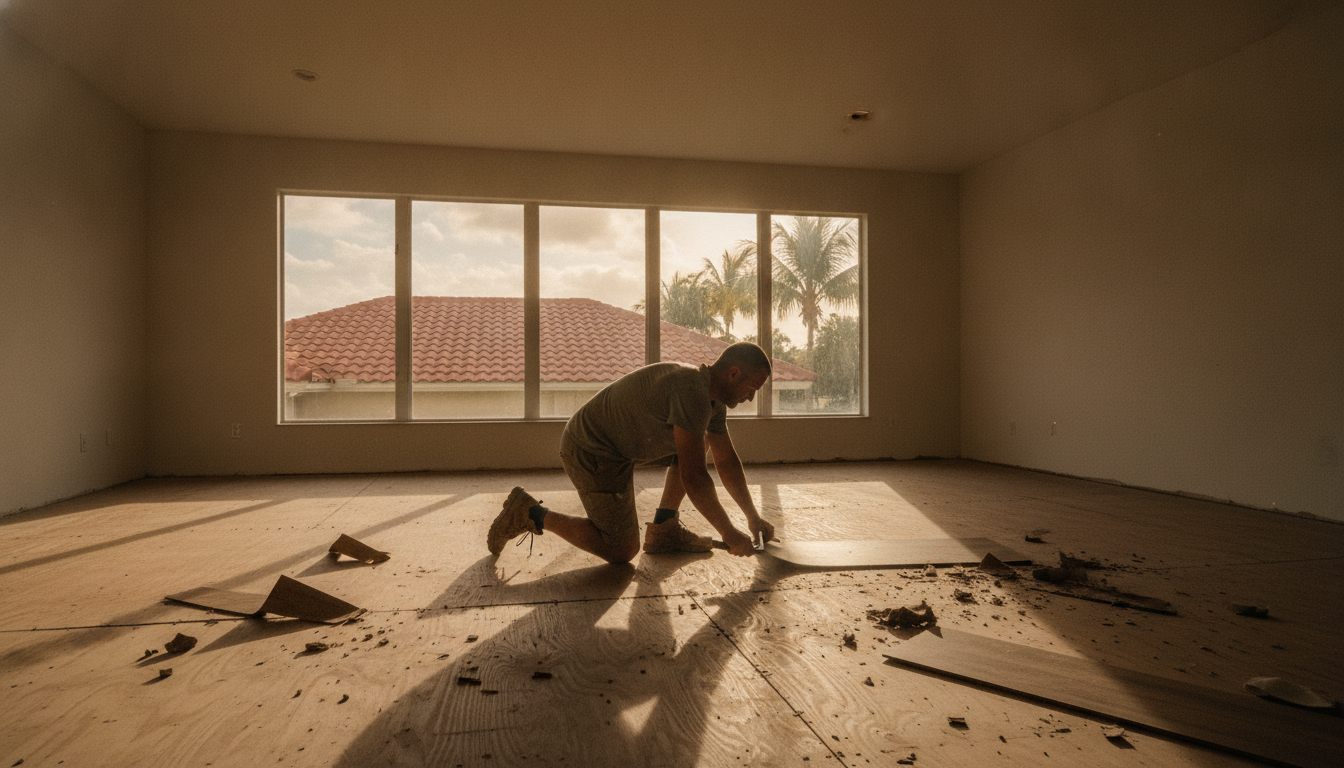
An electric floor scraper is a powered tool that uses a vibrating or reciprocating blade to pry up tile, vinyl, glue, and old adhesive faster than a manual scraper ever could. If you’ve ever spent a Saturday on your knees hand-scraping a kitchen floor, you already know why homeowners search for this tool before a remodel. It cuts labor time, reduces dust when paired with proper technique, and spares your back and knees.
That said, an electric floor scraper isn’t always the right call for every project. Some flooring — especially older sheet vinyl or anything installed before 1980 — may involve asbestos-containing adhesive, which changes the entire safety equation. We’ll walk through when to rent, when to call in a professional crew, and how the tool compares to a long-handle floor scraper or an SDS-plus attachment.
📌 Key Takeaways
- An electric floor scraper removes tile, vinyl, and glue far faster than manual scraping, but it still requires proper technique and PPE.
- SDS-plus floor scraper attachments work well for small sections; stand-up electric models suit whole rooms.
- Renting near Ocala or Gainesville typically costs less per day than replacing a damaged subfloor from improper DIY removal.
- Pre-1980 homes should be tested for asbestos before any scraping begins.
- For large-scale jobs, professional dust-minimized removal often costs less overall than lost weekends and rental fees.
Jump to a section:
- What Is an Electric Floor Scraper?
- Electric vs. Long-Handle vs. SDS-Plus Models
- Finding an Electric Floor Scraper Rental Near You
- DIY vs. Professional Floor Removal
- Using an Electric Floor Scraper Safely
- Flooring Types and Scraper Considerations
- FAQ
What Is an Electric Floor Scraper?
Quick Answer: An electric floor scraper is a corded or battery-powered tool with a flat, angled blade that vibrates or reciprocates to lift flooring materials off a subfloor. It replaces the hammer-and-chisel approach with mechanical force.
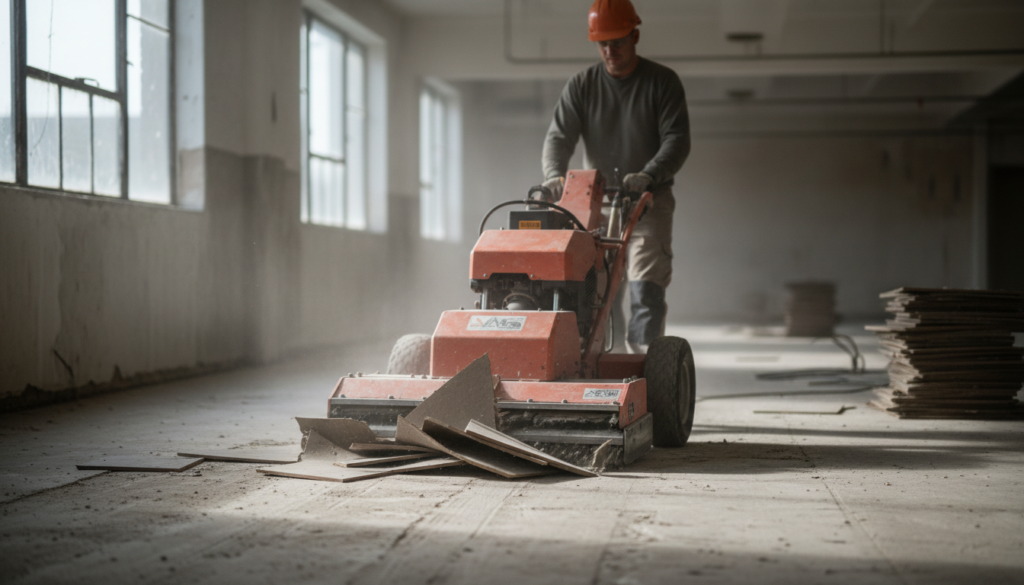
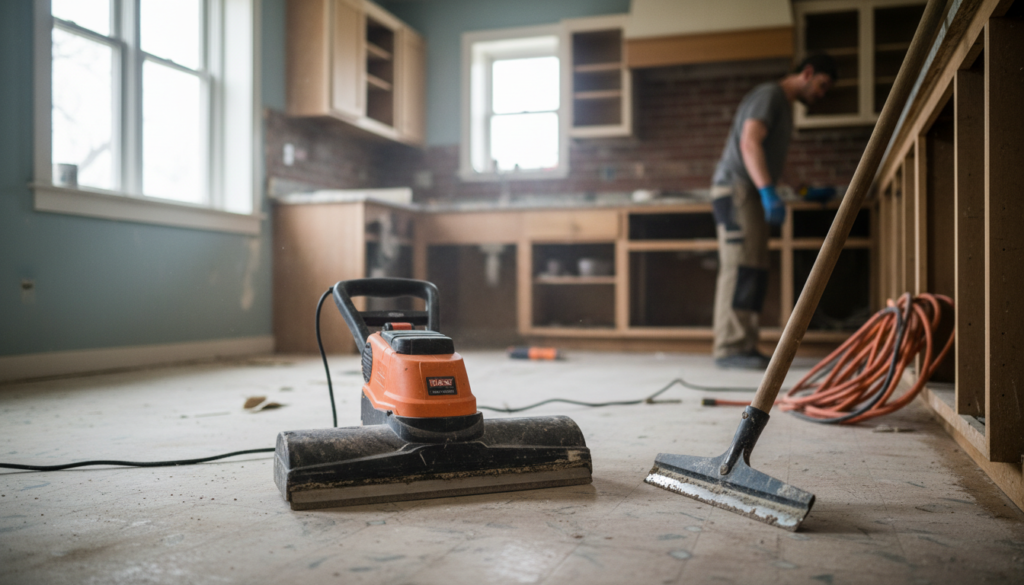
Most models fall into two families: stand-up walk-behind scrapers and handheld units. The walk-behind style resembles a floor buffer and works well for open rooms like a kitchen or great room. Handheld electric scrapers, including SDS-plus floor scraper attachments that fit a rotary hammer, are better suited for edges, closets, and stair treads.
The blade itself does the heavy lifting — literally. It slides under tile, vinyl plank, or old carpet glue and shears the bond between the material and the concrete or plywood beneath it. This is a huge upgrade from a manual pry bar, which relies entirely on your arm strength.
💡 Expert Insight: In our years removing flooring across Marion and Lake counties, we’ve found that blade angle matters more than raw power. A dull or misangled blade gouges subfloor and creates extra repair work.
Corded vs. Battery-Powered Models
Corded electric scrapers deliver consistent power for long sessions but limit your reach to an outlet. Battery models offer mobility for larger homes but need charged spares on hand for a full-day job. Homeowners tackling a single room usually do fine with either option.
Electric Floor Scraper vs. Long-Handle Floor Scraper vs. SDS-Plus Models
Quick Answer: A stand-up electric floor scraper suits whole-room tile or vinyl removal, a long-handle floor scraper is a manual, low-cost option for small patches, and an SDS-plus floor scraper attachment bridges the gap for edges and tight corners.
Choosing between these tools comes down to project size, budget, and how much physical effort you’re willing to put in. Here’s how they stack up side by side.
| Tool Type | Best For | Power Source | Typical Cost | Effort Level |
|---|---|---|---|---|
| Electric floor scraper (stand-up) | Whole rooms, tile, glued vinyl | Electric/battery | $60-$120/day rental | Low-moderate |
| Long handle floor scraper | Small areas, touch-ups | Manual | $25-$50 to buy | High |
| SDS-plus floor scraper attachment | Edges, corners, stairs | Rotary hammer | $150-$250 to buy | Moderate |
A long handle floor scraper still earns a place in most homeowners’ garages. It’s inexpensive, requires no charging or cords, and handles small glue spots or baseboard trim work that a large machine can’t reach.
⚠️ Common Mistake: Many DIYers buy the cheapest long handle floor scraper and try to remove an entire kitchen with it. That approach usually takes three to four times longer than renting an electric model and often ends in a sore back.
When an SDS-Plus Attachment Makes Sense
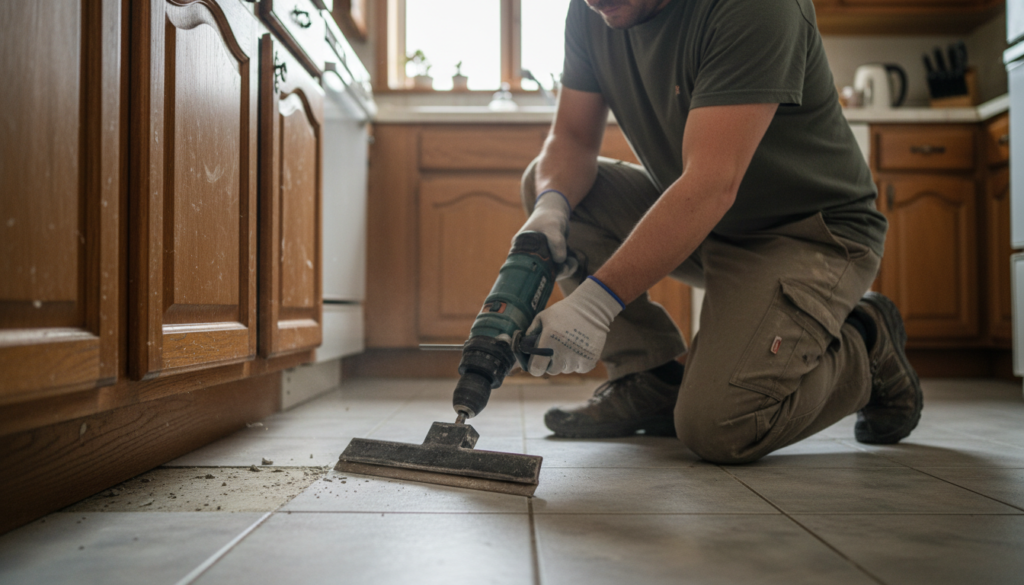
If you already own a rotary hammer for other projects, an SDS-plus floor scraper attachment is a smart add-on rather than a separate rental. It converts your existing tool into a compact scraper for closets, stair nosing, and areas the big machine can’t access.
Finding an Electric Floor Scraper Rental Near You
Quick Answer: Rental centers in Ocala, Gainesville, and Leesburg typically stock electric floor scrapers by the day or half-day, with rates running roughly $60 to $120 depending on model size.
Homeowners across our service area — from Ocala and Belleview to Mount Dora and Tavares — often search "electric floor scraper rental near me" the weekend before a planned remodel. That timing can backfire if the local rental house is out of stock, so calling a few days ahead saves a wasted trip.
Most rental counters require a driver’s license, a credit card hold, and basic training on blade changes. Ask whether the unit comes with spare blades included, since a dull blade slows the job dramatically and can chew up subfloor.
📊 Data Point: According to the U.S. Environmental Protection Agency, homes built before 1978 may contain lead-based paint or adhesives that require special handling during renovation — a good reason to confirm your home’s build year before any scraping begins.
Delivery Fees and Damage Deposits
Some rental yards near Gainesville and Leesburg charge a delivery fee for larger walk-behind units, which can add $20 to $40 to your total. Always ask about the damage deposit policy, since a chipped blade housing or missing charger can result in extra charges.
DIY vs. Professional Floor Removal
Quick Answer: DIY floor removal with an electric floor scraper works well for one room and a free weekend, but whole-house jobs, glued-down hardwood, or older homes with possible asbestos are better left to a licensed crew.
We’ll be honest with you here, because that’s the kind of relationship we want with our clients: renting a scraper and doing it yourself can absolutely save money on a single bathroom or laundry room. But the math changes fast once you factor in dust containment, disposal fees, and the risk of gouging a subfloor you’ll later cover with new flooring.
✅ Quick Tip: Before renting anything, read our guide on professional floor removal and concrete damage to understand what a damaged subfloor repair actually costs.
Signs You Should Call a Pro
Call a professional crew if you notice cracked concrete under old tile, suspect asbestos mastic, or need the job finished in a tight timeline before new flooring installation. Our team offers dust-minimized removal that protects the rest of your home during demolition.
| Factor | DIY with Electric Scraper | Professional Crew |
|---|---|---|
| Time for average kitchen | 1-2 full days | 4-8 hours |
| Dust control | Basic, DIY plastic sheeting | Commercial containment |
| Subfloor damage risk | Higher without experience | Low, trained technicians |
| Disposal | Homeowner’s responsibility | Included in most quotes |
| Best for | Single small rooms | Whole-home or complex removals |
Using an Electric Floor Scraper Safely
Quick Answer: Safe operation of an electric floor scraper involves proper PPE, blade inspection, and a slow, controlled pass rather than forcing the tool through resistant material.
Follow these steps for a smoother, safer removal project:
- Test the flooring material for asbestos if your home predates 1980, per guidance from the Occupational Safety and Health Administration.
- Clear the room and lay down plastic sheeting to contain dust and debris.
- Put on safety glasses, a properly rated dust mask, and knee pads before starting.
- Set the blade angle low and let the electric floor scraper do the work — don’t force downward pressure.
- Work in small sections, clearing debris as you go to keep visibility clear.
- Inspect the subfloor after each pass for gouges or soft spots that need repair before new flooring goes down.
💡 Expert Insight: We tell every homeowner the same thing before they rent a scraper: patience beats horsepower. Rushing the blade through resistant glue is the number one cause of subfloor gouges we repair.
Cleanup and Disposal
Once the flooring is up, bag debris promptly and check with your local waste authority about disposal rules for construction material. Some counties in our service area, including areas around Ocala and Leesburg, have specific drop-off requirements for demolition debris.
Flooring Types and Scraper Considerations
Quick Answer: Vinyl composition tile and glued-down vinyl plank respond well to an electric floor scraper, while ceramic tile and natural stone typically need a rotary hammer or SDS-plus attachment due to the strength of the mortar bond.
Each flooring type reacts differently to a scraper blade. Vinyl composition tile (VCT) usually lifts cleanly once the adhesive softens under blade pressure. Sheet vinyl often comes up in strips, leaving behind a layer of felt backing that needs a second pass.
Ceramic and porcelain tile, by contrast, are set in thick mortar beds that resist even a powerful electric floor scraper. These jobs usually call for a rotary hammer with a chisel bit or an SDS-plus floor scraper attachment working in tandem with the larger machine.
⚠️ Common Mistake: Homeowners sometimes assume one tool handles every flooring type. In reality, most whole-home removals near The Villages or Gainesville use two or three tools in combination.
If you’re planning new flooring after removal, browse our flooring options or explore flooring removal services to see how the process fits into a full remodel timeline. Kitchen and bathroom remodels in particular benefit from professional removal, since our kitchens projects often involve tight scheduling around plumbing and cabinetry work.
Frequently Asked Questions
How much does it cost to rent an electric floor scraper?
Most rental centers in Central Florida charge between $60 and $120 per day for an electric floor scraper, depending on the model and whether blades are included. Delivery fees may apply for larger walk-behind units.
Can an electric floor scraper remove ceramic tile?
An electric floor scraper struggles with ceramic tile set in thick mortar and usually needs help from a rotary hammer or chisel bit. It works best on vinyl, VCT, and glued-down materials rather than mortared tile.
Is a long handle floor scraper good enough for a whole room?
A long handle floor scraper can technically remove a whole room, but it takes far longer and is much harder on your body than a powered option. It’s better suited for small patches or finishing edges after an electric scraper has done most of the work.
What is an SDS-plus floor scraper attachment used for?
An SDS-plus floor scraper attachment converts a rotary hammer into a compact scraping tool for edges, corners, and stair treads. It’s especially useful for spots a large stand-up machine can’t reach.
Do I need to test for asbestos before using a floor scraper?
Yes, if your home was built before 1980, testing is strongly recommended before any scraping begins. The EPA and OSHA both provide guidance on identifying and safely handling older flooring materials.
Where can I find an electric floor scraper rental near me in Ocala or Gainesville?
Most equipment rental yards serving Ocala, Gainesville, and Leesburg stock electric floor scrapers, though availability varies by season. Calling ahead a few days before your project start date is the best way to guarantee a unit is on hand.
Should I rent a scraper or hire a professional flooring removal crew?
Renting works well for a single small room and a flexible schedule, while a professional crew is the better choice for whole-home jobs, older construction, or tight remodel timelines. Our team can walk through your specific project during a free quote consultation.
Final Thoughts
An electric floor scraper is a genuinely useful tool for homeowners tackling a single-room flooring project, offering real time savings over a manual pry bar. It’s not, however, a universal solution — mortared tile, older adhesives, and whole-home projects often call for professional equipment and experience. Weigh the size of your project, your home’s age, and your comfort level with power tools before deciding whether to rent or hire out.
Next steps:
- Confirm your home’s build year and test for asbestos if needed.
- Compare rental rates at equipment centers near Ocala, Gainesville, or Leesburg.
- Decide whether a long-handle floor scraper, SDS-plus attachment, or stand-up electric model fits your project.
- Request a professional quote if your project spans more than one room.
Elite Floor Crafters proudly serves homeowners throughout Marion, Lake, Alachua, and Hernando counties with craftsmanship-focused flooring removal and installation. Request your free quote today and let’s talk through the right approach for your home.