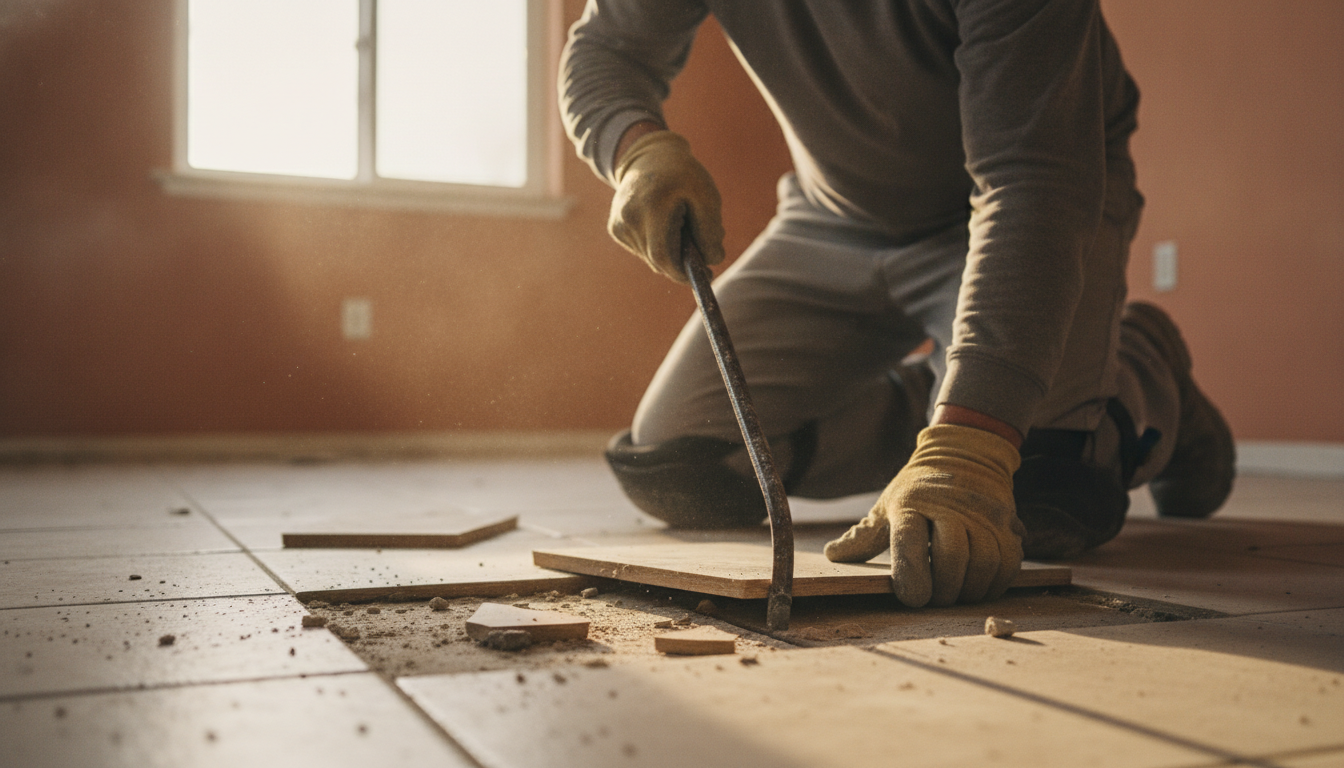
Floor demolition is the process of safely stripping old flooring—tile, hardwood, carpet, or vinyl—down to the bare subfloor so new material can be installed correctly. Handled poorly, it can crack concrete, wreck joists, or stir up hidden asbestos dust. Handled right, it protects your home’s structure and sets every new plank or tile up for a longer, better-looking life.
Homeowners across Ocala, Gainesville, and Leesburg often assume ripping out old floors is a simple weekend job. We hear it a lot: "It’s just tile, how hard can it be?" Then a rented scraper chews into a subfloor, or an old vinyl tile layer turns out to contain asbestos. This guide walks through what actually happens during professional floor demolition, what it costs, and when it’s time to call a pro instead of a rental-store scraper.
📌 Key Takeaways
- Floor demolition should start with an inspection for asbestos, water damage, or subfloor rot before any tool touches the ground.
- Rented floor scrapers can gouge or crack a subfloor if the blade angle or pressure is wrong—technique matters more than horsepower.
- Dust-minimized removal methods protect your family’s air quality during the project, not just your flooring budget.
- Professional floor removal typically runs one to three days depending on square footage and flooring type.
- Always get a written scope before demolition begins so surprises, like rotted subfloor, don’t become surprise invoices.
Jump to a section:
- What Happens During Floor Demolition
- Signs Your Floors Are Ready for Demolition
- Do Floor Scrapers Damage the Subfloor?
- Our Floor Demolition Process, Step by Step
- DIY vs. Professional Floor Demolition
- Cost and Timeline Factors
- Finding the Right Floor Company Near You
- FAQ
What Happens During Floor Demolition
Quick Answer: Floor demolition is a sequence—inspection, containment, removal, and subfloor prep—not just brute force with a crowbar. Skipping a step is usually where trouble starts.
Inspection Comes First
Before any tool touches the floor, a good crew checks the age of the home and the flooring layers underneath. Homes built before 1980, common throughout Marion and Alachua counties, sometimes have old vinyl tile or mastic containing asbestos. The Environmental Protection Agency outlines renovation rules for older homes that responsible contractors follow to keep dust and particulates contained.
Containment and Dust Control
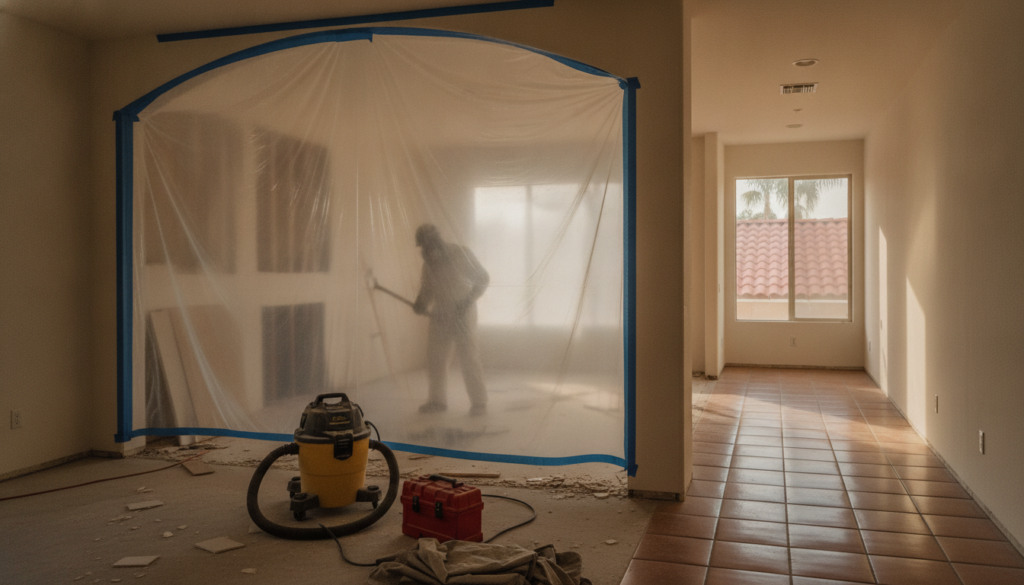
Once the inspection clears, we seal off the work area with plastic barriers and run negative-air equipment. This keeps demolition dust out of your HVAC system and the rest of the house. We cover this approach in more depth in our post on fast, dust-minimized floor removal.
💡 Expert Insight: In my experience walking homes around Ocala, the dust from an uncontained tile tear-out settles into air ducts within hours—then you’re paying for duct cleaning on top of new flooring.
Signs Your Floors Are Ready for Demolition
Quick Answer: Cupping wood, cracked tile grout lines, soft spots underfoot, or a musty smell are all cues that floor demolition, not another patch job, is the right next move.
Structural Red Flags
Soft or bouncy spots usually mean moisture has reached the subfloor, a wood layer beneath the visible flooring that carries structural load. Left alone, that damage spreads. A licensed inspector or flooring pro can confirm the extent before you commit to a full tear-out.
Cosmetic Wear That Signals Deeper Problems
Widespread cracked tile, buckled laminate, or carpet that never dries after a Florida summer storm often points to a subfloor issue rather than a surface one. In these cases, patching the visible layer only delays the inevitable demolition.
Do Floor Scrapers Damage the Subfloor?
Quick Answer: Yes, floor scrapers can damage a subfloor—but usually because of technique, not the tool itself. Wrong blade angle, excess downward pressure, or the wrong scraper for the material are the real culprits.
Manual vs. Power Scrapers
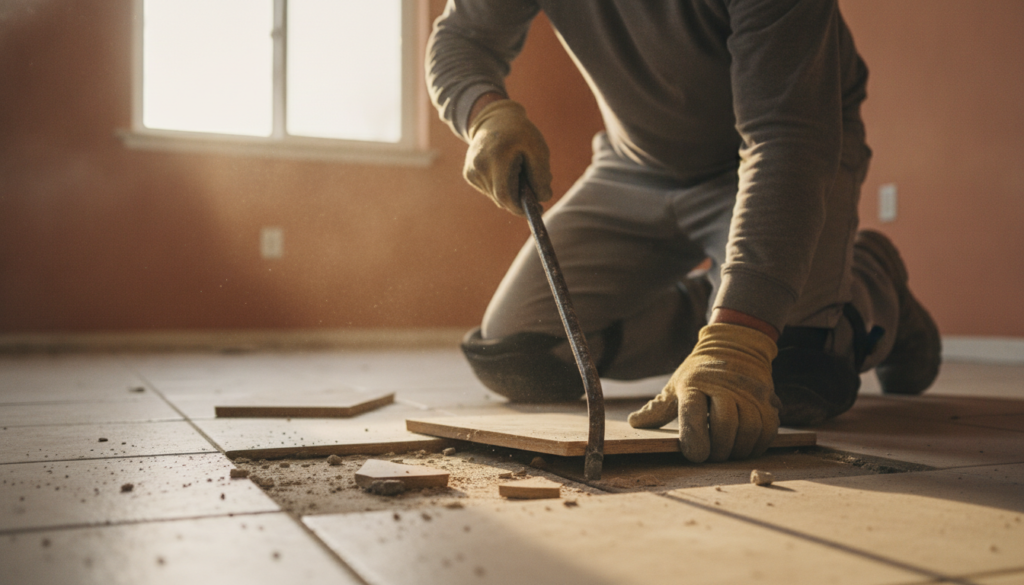
A manual floor scraper gives more control but demands patience and the right wrist angle to avoid gouging plywood. Power scrapers move faster but can tear into a subfloor in seconds if the operator doesn’t ease off pressure near seams and edges.
How Professionals Protect the Subfloor
We test blade angle on a small hidden section first, adjust for adhesive type, and switch tools when we hit resistance instead of forcing through it. According to the National Wood Flooring Association, proper subfloor preparation is one of the leading factors in how long a new floor installation lasts.
⚠️ Common Mistake: Renting the biggest scraper available and running it at full power over old vinyl tile. That’s the fastest way to punch through a plywood subfloor and turn a simple removal into a costly repair.
| Scraper Type | Best For | Subfloor Risk |
|---|---|---|
| Manual hand scraper | Small rooms, tight edges | Low, with steady technique |
| Walk-behind power scraper | Large open rooms | Moderate to high if untrained |
| Professional-grade removal system | Any size, mixed materials | Low, operator-controlled |
Our Floor Demolition Process, Step by Step
Quick Answer: Our floor demolition process follows six repeatable steps that protect your subfloor, your air quality, and your project timeline.
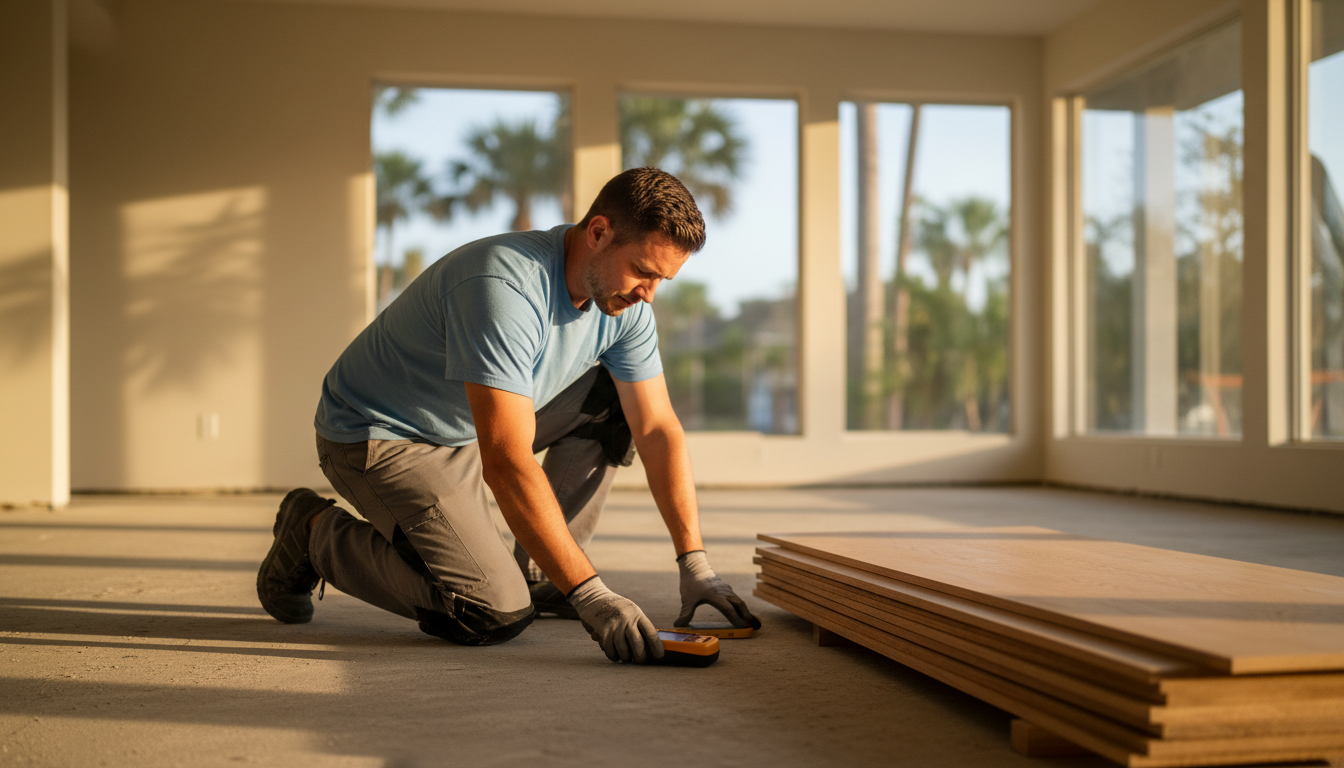
- Site inspection — we check flooring age, moisture readings, and subfloor condition.
- Containment setup — plastic barriers and air scrubbers isolate the work zone.
- Material removal — tile, wood, carpet, or vinyl comes out in sections, not all at once.
- Debris haul-away — old material and adhesive residue are cleared same-day when possible.
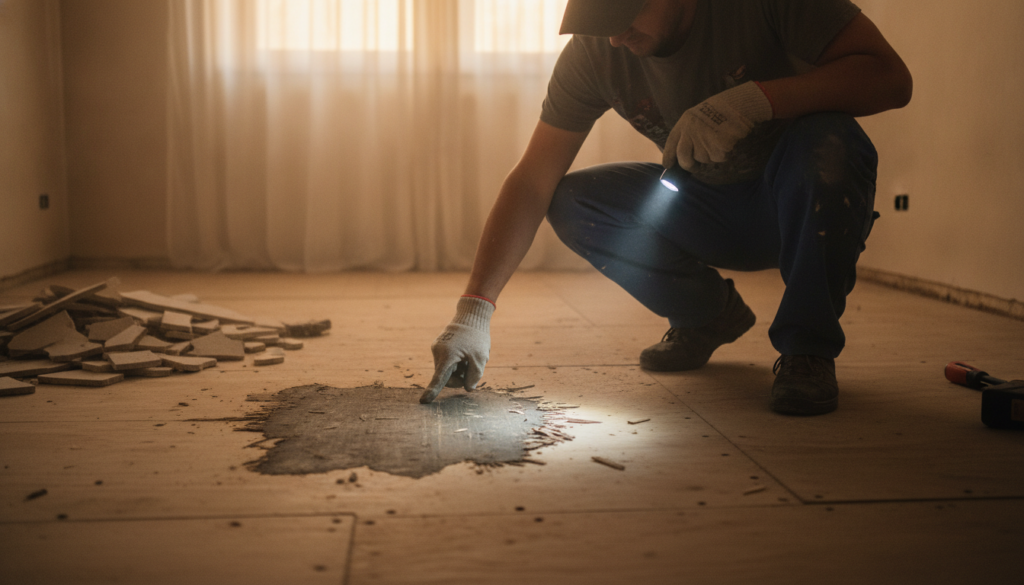
- Subfloor assessment and repair — we flag and fix soft spots, rot, or uneven areas.
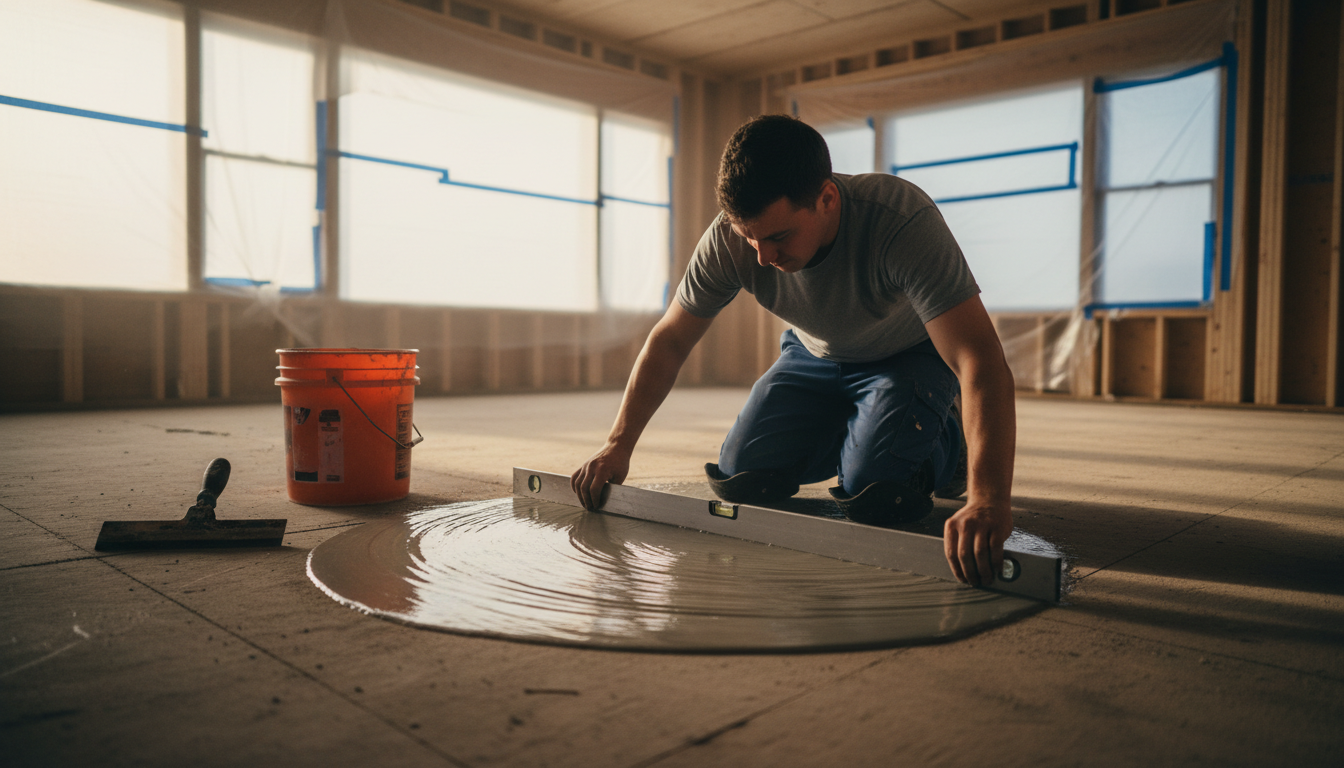
- Final prep — the subfloor is cleaned, leveled, and ready for your new flooring installation.
We detail the concrete-specific version of this process, including how we avoid slab damage, in our article on professional floor removal and concrete damage.
📊 Data Point: According to the Occupational Safety and Health Administration, improperly controlled construction dust is a recognized respiratory hazard—one more reason containment isn’t optional on any demolition job, residential or commercial.
DIY vs. Professional Floor Demolition
Quick Answer: DIY floor demolition can save money on small, single-layer rooms, but it raises real risk for subfloor damage, hidden hazardous materials, and disposal headaches on larger jobs.
When DIY Might Make Sense
A small closet or single layer of carpet over plywood is fairly forgiving. If the home is newer, built after the mid-1980s, the odds of hazardous materials are lower.
When to Call a Professional
Multi-layer floors, older homes, whole-house projects, or anything paired with a kitchen or bathroom remodel usually call for a pro. Our kitchens and bathroom remodeling projects almost always start with a professional tear-out to protect plumbing lines and cabinetry.
| Factor | DIY | Professional |
|---|---|---|
| Upfront cost | Lower | Higher, but predictable |
| Subfloor risk | Higher | Lower |
| Hazardous material handling | Not equipped | Equipped and trained |
| Debris disposal | Your responsibility | Included |
| Time investment | Full weekend or more | 1-3 days, scheduled |
✅ Quick Tip: If you’re unsure whether your home might have older flooring materials with hazardous adhesive, get a professional inspection before renting any equipment. It’s a small cost that avoids a much bigger one.
Cost and Timeline Factors
Quick Answer: Floor demolition pricing depends mainly on square footage, flooring type, number of layers, and whether hazardous material testing is required.
What Drives the Price Up or Down
Ceramic tile set in thick mortar takes longer to remove than glued-down laminate. Multiple layers—say, carpet over old vinyl over hardwood—add labor hours. Homes needing asbestos testing before demolition, common in older Alachua and Marion county neighborhoods, add a testing timeline too.
Realistic Timelines
A single average-sized room typically takes a day. Whole-home floor demolition ahead of a full flooring replacement often runs two to four days, depending on access and disposal logistics.
Finding the Right Floor Company Near You
Quick Answer: Look for a flooring company that treats demolition as its own skilled phase, not an afterthought before installation—and one that’s transparent about scope and pricing upfront.
What to Ask Before You Hire
Ask how the company handles dust containment, subfloor damage discovered mid-project, and disposal. A written scope of work should spell out what happens if hidden problems surface once removal begins.
Serving Homeowners Across Central Florida
We work with homeowners throughout Ocala, Gainesville, Leesburg, Mount Dora, Belleview, and Summerfield, handling everything from single-room tear-outs to full-home flooring removal ahead of kitchen and bathroom remodels. If you’re comparing flooring removal quotes, see our dedicated flooring removal page for what’s included in our process.
💡 Expert Insight: The best sign of a solid floor company near you isn’t the lowest bid—it’s whether they can clearly explain what they’ll do if they find rot or hazardous material once the old floor comes up.
FAQ
Do floor scrapers damage the subfloor?
Floor scrapers can damage a subfloor if used with the wrong blade angle or too much downward pressure, especially on plywood. A trained operator adjusts technique and tool choice to avoid gouging, which is why professional floor demolition carries lower subfloor risk than DIY rentals.
How much does floor demolition cost?
Cost varies by square footage, flooring type, number of layers, and whether hazardous material testing is needed. A single room typically costs less than whole-home removal, and getting a written quote is the only reliable way to know your exact number.
How long does floor demolition take?
A single room usually takes about a day, while whole-home floor demolition ahead of new flooring installation often takes two to four days. Timelines can extend if hidden subfloor damage or hazardous materials are discovered.
Is floor demolition messy?
It can be, but dust-minimized methods with containment barriers and air scrubbers keep debris and particulates from spreading into the rest of the home. Ask any contractor how they handle containment before work begins.
Can I do floor demolition myself?
Small, single-layer rooms in newer homes are reasonable DIY projects for a confident homeowner. Multi-layer floors, older homes, or anything near plumbing and cabinetry are better left to a professional to avoid subfloor or structural damage.
What happens if my subfloor is damaged during demolition?
A reputable contractor inspects the subfloor immediately after removal and flags any rot, soft spots, or unevenness before installation begins. Reputable companies include this assessment as a standard step, not a surprise add-on.
Do I need to test for asbestos before floor demolition?
Homes built before the 1980s, common throughout our Central Florida service area, sometimes contain asbestos in old tile or adhesive. Testing before demolition is the safest approach, and the EPA provides guidance on renovation practices for older homes.
Ready to Move Forward
Floor demolition is the foundation, quite literally, of a successful flooring project. Skipping the inspection, containment, or subfloor assessment steps is where most costly surprises start. Whether you’re prepping for new flooring, a kitchen remodel, or a bathroom renovation, the removal phase deserves the same craftsmanship as the installation itself.
- Schedule an inspection to check for asbestos, moisture, or subfloor damage.
- Get a written scope of work before any demolition begins.
- Confirm dust containment and debris disposal are included.
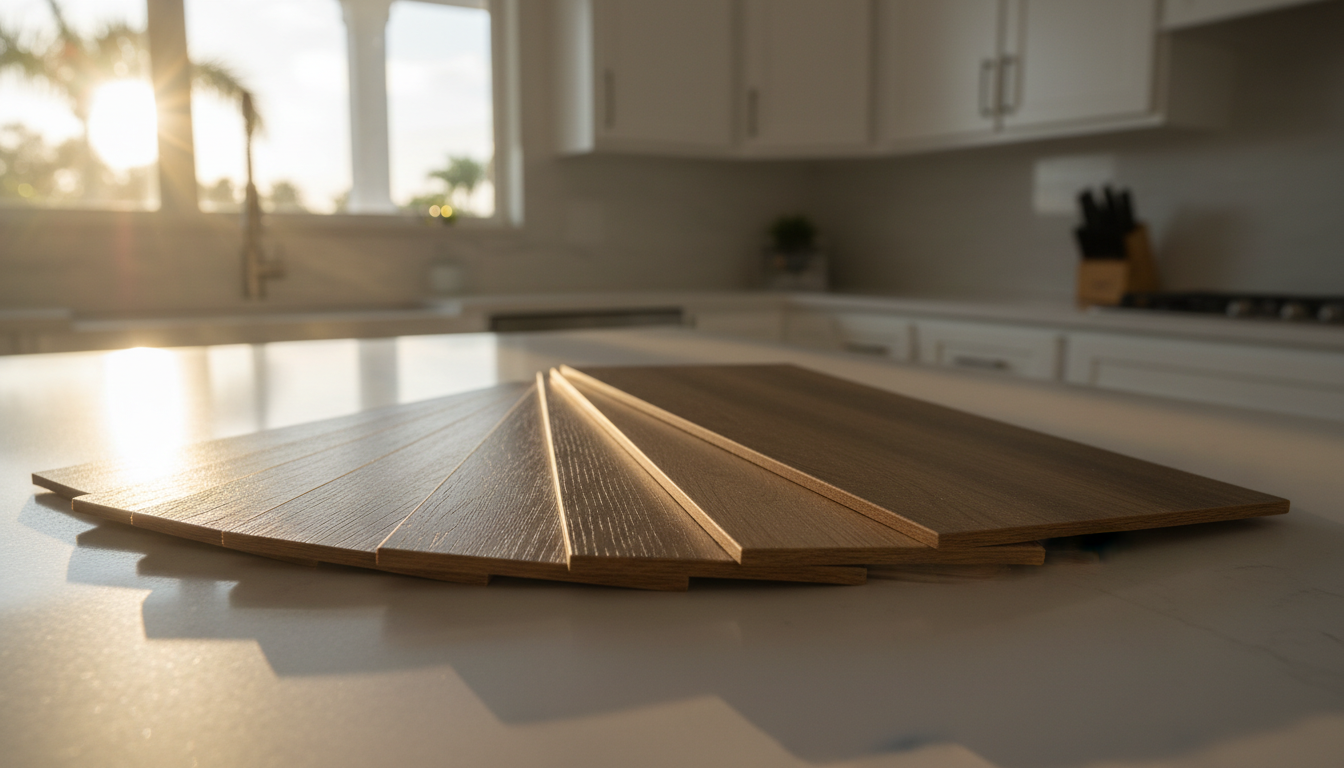
- Plan your new flooring selection alongside the demolition timeline.
Elite Floor Crafters is a Florida-based flooring contractor; ask about current licensing details for your specific project. Request a free, no-pressure quote today and let’s talk through your floor demolition plan together.