If you’ve ever walked into a freshly floored room and caught that sharp, plasticky smell, you’ve already met VOCs — and finding the top rated low VOC flooring brands is the fastest way to avoid that experience for good. Volatile organic compounds are gases released from certain building materials, and some flooring products off-gas them for weeks after installation. The good news: several established manufacturers now build entire product lines around low-VOC and non-PVC formulas, so you don’t have to choose between a healthy home and a beautiful one.
At Elite Floor Crafters, we’ve installed enough flooring across Marion, Lake, and Alachua counties to know which brands actually deliver on their air-quality claims versus which ones just print a green leaf on the box. This guide breaks down the certifications that matter, the brands worth your consideration, and how to pick a product that fits Florida’s humidity and your home’s style.
📌 Key Takeaways
- Look for FloorScore or GREENGUARD Gold certification, not just marketing language like "eco-friendly."
- Low-VOC does not mean low-quality — several premium brands now lead in both durability and air safety.
- Non-PVC flooring options (like WPC-alternative cores and linoleum) are worth asking about if you have chemical sensitivities.
- Florida’s humidity makes moisture resistance just as important as VOC ratings — the two go hand in hand.
- A professional consultation catches issues (subfloor moisture, adhesive compatibility) that online research can’t.
Jump to a Section
- Why VOC Ratings Matter in Florida Homes
- How to Verify a Brand’s Low-VOC Claims
- Top Rated Low-VOC Flooring Brands to Consider
- Non-PVC and Resilient Sheet Flooring Options
- Low-VOC Flooring and Florida Resale Value
- FAQ: Low-VOC Flooring Questions Homeowners Ask
Why VOC Ratings Matter in Florida Homes
Quick Answer: VOCs off-gas faster in warm, humid climates, which makes air-quality ratings especially relevant for Central Florida homeowners. Choosing certified low-VOC flooring reduces indoor pollutants without sacrificing the finished look you want.
Florida’s heat and humidity accelerate the chemical reactions that release VOCs from adhesives, sealants, and some vinyl backings. That means a flooring product installed in Ocala or Gainesville can off-gas faster than the same product in a drier northern climate. According to the EPA’s overview of volatile organic compounds, VOC concentrations indoors can be two to five times higher than outdoor levels, and certain flooring adhesives are a documented contributor.
Who Should Prioritize Low-VOC Flooring
Families with young children, older adults, and anyone managing asthma or chemical sensitivities benefit most from low-VOC choices. We’ve had clients in Summerfield and The Villages area specifically request VOC-free flooring after a family member’s allergist recommended it. It’s a reasonable ask, and honestly, most quality brands make it easy to accommodate now.
✅ Quick Tip: Ask your installer for the manufacturer’s Safety Data Sheet (SDS) before installation day. It lists VOC content per product, not just per brand.
How to Verify a Brand’s Low-VOC Claims
Quick Answer: Third-party certifications like FloorScore and GREENGUARD Gold are the real proof — brand marketing alone isn’t enough. Always check for a certification number you can look up independently.
Flooring packaging is full of phrases like "eco-conscious" or "green choice" that have no legal definition. Real verification comes from independent testing bodies. Two certifications carry the most weight in the flooring industry today.
FloorScore Certification
FloorScore, administered through SCS Global Services, tests hard-surface flooring and adhesives against indoor air quality standards used in California’s stringent building codes. A FloorScore label means the product was independently tested for VOC emissions, not just formulated with fewer chemicals.
GREENGUARD Gold Certification
GREENGUARD Gold certification, managed by UL, sets an even stricter emissions bar and specifically accounts for sensitive populations like children and the elderly. If a product carries both FloorScore and GREENGUARD Gold, that’s about as verified as low-VOC flooring gets.
⚠️ Common Mistake: Assuming all luxury vinyl plank (LVP) is automatically low-VOC. Some budget LVP lines still use PVC cores and standard adhesives with higher emissions — always check the specific product line, not just the category.
Top Rated Low-VOC Flooring Brands to Consider
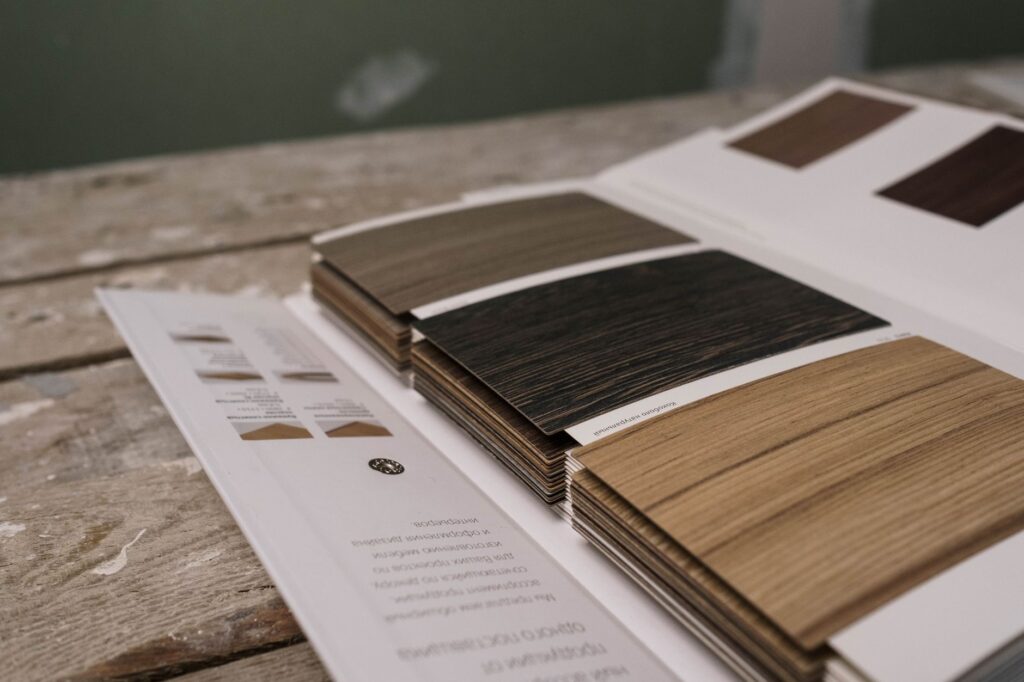
Quick Answer: Brands like Shaw’s Floorté, Mohawk’s RevWood and SolidTech lines, Karndean, and Marmoleum consistently earn FloorScore or GREENGUARD certification while holding up in Florida’s climate. No single brand fits every budget or design goal, so match certification, warranty, and style together.
We don’t push one manufacturer over another — our job is matching the right certified product to your household. Here’s how several respected brands compare on the factors our clients ask about most.
| Brand / Line | Certification | Best For | Florida Climate Fit |
|---|---|---|---|
| Shaw Floorté | FloorScore | Waterproof LVP, kitchens | Excellent |
| Mohawk RevWood | FloorScore | Wood-look without solid wood moisture risk | Very good |
| Karndean | FloorScore | Design-forward LVT, custom patterns | Excellent |
| Marmoleum (Forbo) | FloorScore, GREENGUARD Gold | Natural linoleum, non-PVC | Good (needs proper subfloor prep) |
| Mannington | FloorScore | Sheet vinyl and resilient flooring | Very good |
Matching Brand to Room and Lifestyle
A busy kitchen in a Leesburg home has different needs than a quiet guest suite in Mount Dora. For high-traffic, moisture-prone spaces, we typically steer clients toward Shaw Floorté or Karndean’s waterproof cores. For homeowners prioritizing natural materials, Marmoleum’s linoleum — made from linseed oil, cork dust, and jute — is a genuinely non-PVC option worth a look.
💡 Expert Insight: In my experience walking clients through our mobile showroom across Ocala and Belleview, the biggest surprise is that certified low-VOC products now match — and sometimes beat — conventional flooring on scratch resistance and warranty length.
If you want a deeper dive into specific PVC-free product lines, our PVC-free flooring guide covers install methods and long-term care in more detail than we can fit here.
Non-PVC and Resilient Sheet Flooring Options
Quick Answer: If you specifically want non-PVC flooring, linoleum, certain engineered hardwoods, and select resilient sheet flooring lines meet that goal while still resisting Florida humidity reasonably well. Always confirm the wear layer and backing material, since "vinyl-look" doesn’t always mean vinyl-free.
A number of our recent inquiries — including one from a homeowner in Eustis — start the same way: "Where can I find resilient sheet flooring that’s environmentally friendly and free from harmful substances?" It’s a fair question, since resilient sheet flooring covers a wide range of materials, some PVC-based and some not.
Linoleum vs. Vinyl Sheet Flooring
True linoleum (like Forbo’s Marmoleum) is biodegradable and PVC-free by nature, made from renewable materials pressed onto a jute backing. Vinyl sheet flooring, by contrast, is PVC-based unless specifically labeled otherwise. They can look similar in a showroom photo, so this is a case where reading the product spec sheet really matters.
📊 Data Point: Per the EPA’s indoor air quality resources, building materials and furnishings are among the primary sources of indoor VOCs, reinforcing why material selection — not just ventilation — is part of a healthy home strategy.
Subfloor and Moisture Prep Still Matter
Even the most certified low-VOC product will underperform if installed over a damp or uneven subfloor. We handle proper moisture testing and floor removal before every install, which protects both the warranty and the air-quality performance of your new floor.
Low-VOC Flooring and Florida Resale Value
Quick Answer: Certified low-VOC and non-PVC flooring is increasingly a selling point for Florida buyers, especially in family-oriented markets like Clermont and Gainesville. It won’t single-handedly boost your appraisal, but it removes a hesitation point for health-conscious buyers.
Homeowners planning to sell within the next few years often ask us about the best flooring for resale value in Florida specifically. Durability, water resistance, and a neutral, updated look still drive most of that value. But we’ve noticed more listing agents in our service area highlighting "low-VOC" or "eco-friendly flooring" as a feature, particularly in newer developments around Minneola and Groveland.
Design Trends That Pair Well With Low-VOC Materials
Warm wood-look LVP and matte-finish tile continue to dominate buyer preference in our region, and thankfully both are widely available in certified low-VOC lines now. If you’re weighing wood-look options specifically, our best LVP for Florida’s climate guide breaks down performance by room type.

✅ Quick Tip: If resale is your main goal, ask your flooring contractor for the ROI data by material type before committing — our Florida flooring ROI guide is a good starting reference point.
One honest caveat worth naming: no flooring choice, however well-certified, replaces good ventilation habits during and after installation. Opening windows and running HVAC fans for the first 48–72 hours after any new flooring install is still smart practice, regardless of brand.
FAQ: Low-VOC Flooring Questions Homeowners Ask
What are the top rated low VOC flooring brands for Florida homes?
Shaw Floorté, Mohawk RevWood, Karndean, Mannington, and Forbo’s Marmoleum consistently earn FloorScore or GREENGUARD Gold certification and perform well in Florida’s humidity. The right pick depends on your room’s moisture exposure and design goals.
Where can I find resilient sheet flooring that is environmentally friendly and free from harmful substances?
Look for resilient sheet flooring lines carrying FloorScore or GREENGUARD Gold certification, and confirm whether the backing is PVC-based or a natural alternative like linoleum. Manufacturers such as Forbo and Mannington publish certification details directly on their product spec sheets.
Is non-PVC flooring more expensive than standard vinyl?
Non-PVC options like linoleum or certain engineered wood products can cost slightly more upfront than budget vinyl, though pricing varies by line and installation complexity. Many homeowners find the difference reasonable given the air-quality and longevity benefits.
What is the best flooring for sustainable interior design?
Linoleum, FSC-certified engineered hardwood, and cork rank among the most sustainable choices because they use renewable or rapidly replenishing materials. Pairing any of these with a low-VOC adhesive keeps the entire installation aligned with sustainable design goals.
Does low-VOC flooring hold up to Florida humidity and heat?
Yes, most certified low-VOC lines from major manufacturers are engineered for warm, humid climates, including waterproof cores designed for kitchens and bathrooms. Proper subfloor prep and acclimation before installation still matter for long-term performance.
How long does low-VOC flooring off-gas after installation?
Certified low-VOC products typically off-gas minimally and dissipate within a few days when the space is well-ventilated, compared to weeks for some conventional materials. Running fans and opening windows during the first 48–72 hours speeds this along further.
What is the best flooring for resale value in Florida?
Waterproof LVP and neutral wood-look tile currently show the strongest buyer appeal across our Central Florida service area, and certified low-VOC versions add an extra selling point for health-conscious buyers. Durability and consistent maintenance still matter more than certification alone for appraisal value.
Bringing It All Together
Choosing among the top rated low VOC flooring brands doesn’t have to mean sacrificing style, durability, or budget — it just means knowing which certifications to trust and which questions to ask before you buy. Florida’s climate adds a few extra considerations, from humidity resistance to subfloor prep, that make a local, hands-on consultation genuinely worthwhile. We’ve walked dozens of families across Ocala, Gainesville, Leesburg, and The Villages area through this exact decision, and it always comes down to matching certified materials to real household needs.
Next steps:
- List your priorities — allergies, pets, resale timeline, or design style.
- Request FloorScore or GREENGUARD Gold documentation for any product you’re considering.
- Schedule a walkthrough so we can check subfloor moisture and humidity exposure in your specific rooms.
- Compare two or three certified options side by side before deciding.
Ready to see certified low-VOC samples in person? Schedule your flooring consultation with Elite Floor Crafters and let’s find a healthy, beautiful floor built for your home.